
Why “Just Do Instagram But In Chinese” Doesn’t Work
Brands new to the Chinese market often ask us to copy their Western social strategy onto local platforms. That request usually falls apart in the first strategy call. Chinese social media isn’t a parallel version of Meta and TikTok; it runs on different commerce logic, content formats, and user habits.
Facebook, Instagram, and YouTube are blocked in mainland China. That fact alone changes how brands need to approach Chinese consumers. There’s no cross-post-and-adjust shortcut here — you’re building a presence from zero, on platforms most Western marketing teams have never actually used themselves.
The Core Platforms Every Brand Needs to Understand
Xiaohongshu (RED): Where Discovery Happens
Xiaohongshu, sometimes called “RED” or “the Little Red Book” in English coverage, sits somewhere between Pinterest, Instagram, and a product review site. Users post try-on hauls, skincare routines, and shopping guides, and other users search those posts much like they’d search Google for a recommendation.
For beauty, fashion, and lifestyle brands, Xiaohongshu is often where Chinese consumers research a product before ever setting foot on a Tmall storefront. A Xiaohongshu presence built on content that feels authentic — rather than polished ad creative — tends to do better, because the platform’s culture rewards posts that read like a friend’s honest opinion, not a brand pitch.
That distinction matters a lot for categories like premium hair styling tools or skincare, where people decide to buy based on trust and visible results, not spec sheets.
Douyin: Entertainment That Converts
Douyin is the domestic counterpart to TikTok — same parent company, but a separate app with its own content ecosystem, algorithm, and commerce infrastructure. The short-video format drives huge reach, but what really sets Douyin apart from Western platforms is how tightly commerce is woven into the viewing experience: livestream shopping, in-feed shop links, and creator-led product demos aren’t add-ons; they’re standard.
Brands that treat Douyin as just a brand-awareness channel usually leave money on the table. Its real value is shortening the distance between “interesting video” and “completed purchase” within the same app session. Before locking in a content calendar, it’s worth reading our breakdown of the differences between Douyin and TikTok e-commerce.
WeChat: The Retention Layer
WeChat doesn’t drive viral discovery the way Xiaohongshu or Douyin can. Its job is maintaining brand relationships after the first purchase. Official accounts, mini-programs, and private customer groups all run on WeChat, which makes it the backbone of CRM and repeat-purchase strategy for most brands operating in China over the long term.
Weibo: Public Conversation and PR
Weibo works closer to Twitter — public, fast-moving, useful for real-time PR and trending topics, and it reaches a broader, often younger audience than WeChat’s more closed ecosystem allows.
Chinese Influencer Marketing Works Differently Than You Think
The term “Chinese influencer” covers a much wider range than most foreign marketers expect. At the top are KOLs (Key Opinion Leaders) — established creators with large followings, significant fees, and polished branded content. Below them are KOCs (Key Opinion Consumers), everyday users with smaller but highly trusted followings, whose reviews often convert better precisely because they don’t look like advertising.
A mistake we see often: brands put their entire influencer budget into a handful of big-name KOLs, chasing follower counts, when a wider network of KOCs posting genuine Xiaohongshu reviews often drives more actual sales at a lower cost per acquisition. The right mix depends on category, price point, and whether the goal is building awareness or closing sales within the same campaign.
Influencer selection also has to account for platform fit. A skincare KOC who’s built trust on Xiaohongshu won’t necessarily land on Douyin, where livestream performance and on-camera energy count for more than review-writing skill.
Chinese Street Fashion and Streetwear as a Content Lens
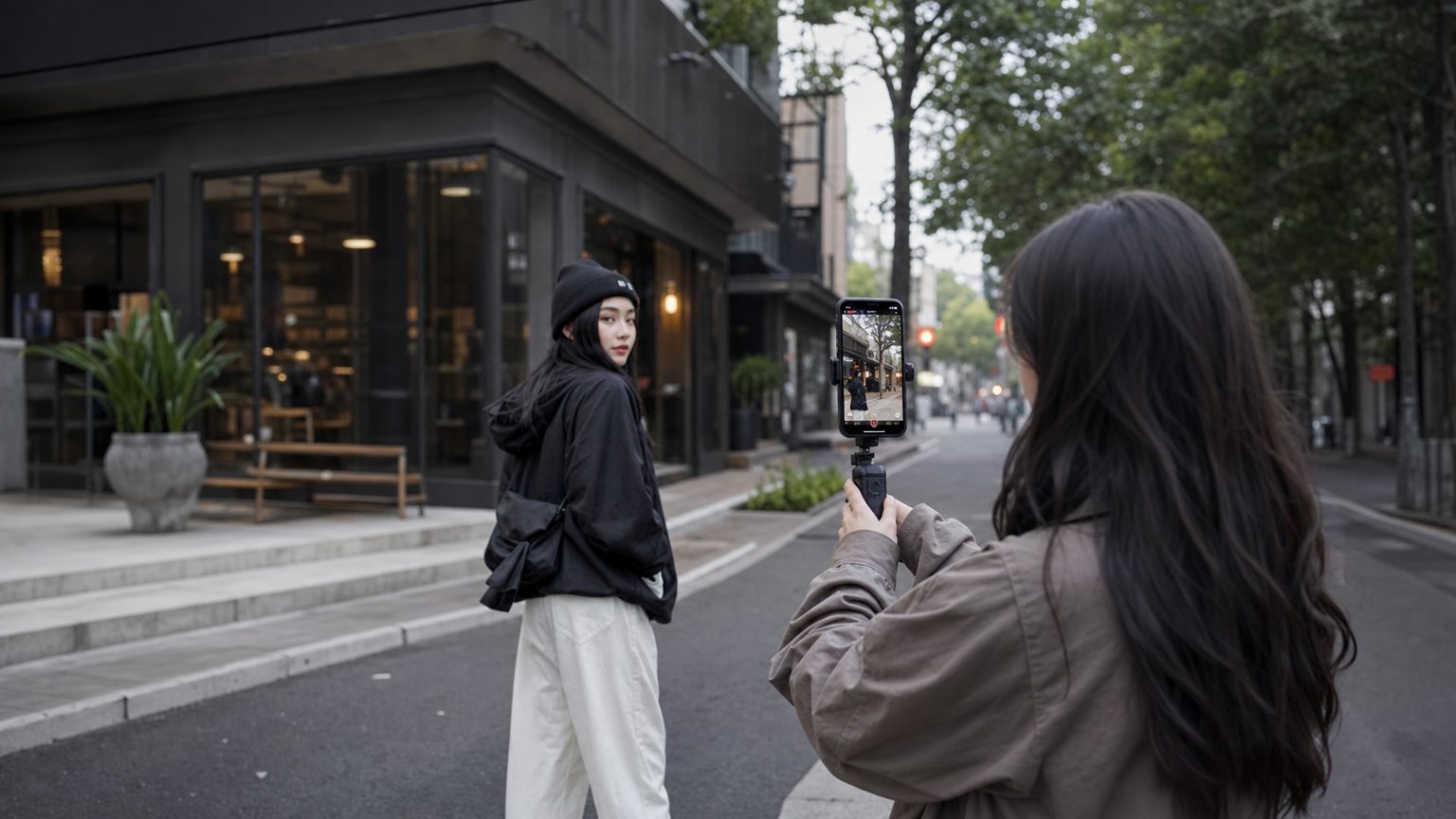
Chinese street fashion has its own visual language — distinct from Western streetwear, though influenced by it — with strong regional identities in cities like Shanghai, Chengdu, and Guangzhou. Chinese streetwear culture mixes domestic designer labels, international sneaker culture, and a fast-moving appetite for limited drops, and most of this plays out on Xiaohongshu and Douyin long before it reaches retail coverage.
For fashion, beauty, and lifestyle brands, this matters beyond looks. Street style content tends to perform well organically because it’s visual and shareable by nature, giving brands a natural way into cultural relevance without having to invent a campaign concept from scratch. A brand entering China with a design-forward or fashion-adjacent product — color-driven personal care tools or accessories, for example — can borrow credibility by tying content to existing street style conversations rather than trying to compete against them.
Building a Social Strategy That Actually Ties to Sales
Content without a path to commerce is just brand-awareness spending with no measurable return. Brands that succeed on Chinese social media build a deliberate handoff: Xiaohongshu and Douyin content drives discovery and consideration, then routes traffic toward a storefront on Tmall or another major Chinese e-commerce platform where the transaction actually happens.
This is also why platform choice can’t be separated from a broader digital marketing strategy in China. A brand chasing Xiaohongshu followers with no Tmall or Douyin Shop presence to catch that demand is leaving conversion on the table. The reverse is just as true: a strong storefront with no social content strategy has nothing feeding it new customers.
A few operational realities worth planning around:
- Content localization isn’t translation. Copy that works on Instagram usually reads stiff or overly promotional once it’s directly translated into Xiaohongshu’s more conversational tone.
- Compliance and account verification for brand accounts on these platforms involve documentation and review steps that differ meaningfully from Meta or Google’s business verification.
- Algorithm behavior on both Xiaohongshu and Douyin shifts often, so a content strategy built around last year’s best practices can quietly stop working.
- Livestreaming needs real production planning. It’s not a webcam and a ring light — especially on Douyin, where viewers expect tight pacing and strong offers.
Where Foreign Brands Get Stuck
Most delays we see aren’t creative problems; they’re operational ones. Setting up verified brand accounts, navigating each platform’s advertising and e-commerce integration requirements, and building a posting cadence that matches local norms all take longer than brands expect without local infrastructure.
This is where many brands underestimate the value of a partner with verified accounts, platform relationships, and a track record of which content formats convert in a given category. Getting these fundamentals wrong in month one tends to cost more in lost momentum than it would have cost to set them up correctly from the start.
Getting Started
If a brand is weighing Chinese social media as part of a broader China market entry plan, the order of operations matters: figure out which platform fits the category, build a content approach suited to that platform’s culture, and make sure the e-commerce infrastructure is ready to capture the demand that content generates. Brands that jump straight to content production without this groundwork typically end up rebuilding their strategy six months in.
FAQ
Is Chinese social media the same as Western platforms like Instagram?
No. Facebook, Instagram, and YouTube are blocked in mainland China, so brands build presence on entirely separate platforms — Xiaohongshu, Douyin, WeChat, and Weibo — each with distinct content cultures and commerce integrations.
What’s the difference between Xiaohongshu and Douyin for brand marketing?
Xiaohongshu functions more like a searchable review and discovery platform, ideal for building trust through authentic-feeling posts. Douyin is short-video entertainment with heavy livestream and in-app commerce integration, better suited for driving immediate conversions.
What’s a KOC versus a KOL in Chinese influencer marketing?
KOLs are established creators with large followings and higher fees, often producing polished branded content. KOCs are everyday users with smaller, highly trusted followings whose authentic-style reviews frequently convert better at a lower cost.
Do I need a WeChat presence if I’m focused on Xiaohongshu and Douyin?
Most brands eventually need WeChat because it handles customer retention, CRM, and repeat purchases through official accounts and mini-programs, even though it doesn’t drive the same viral discovery as Xiaohongshu or Douyin.
How does Chinese street fashion content fit into a brand’s social strategy?
Street style content is highly visual and shares well organically on Xiaohongshu and Douyin, giving fashion-adjacent and lifestyle brands a natural way to build cultural relevance without constructing a campaign from scratch.