
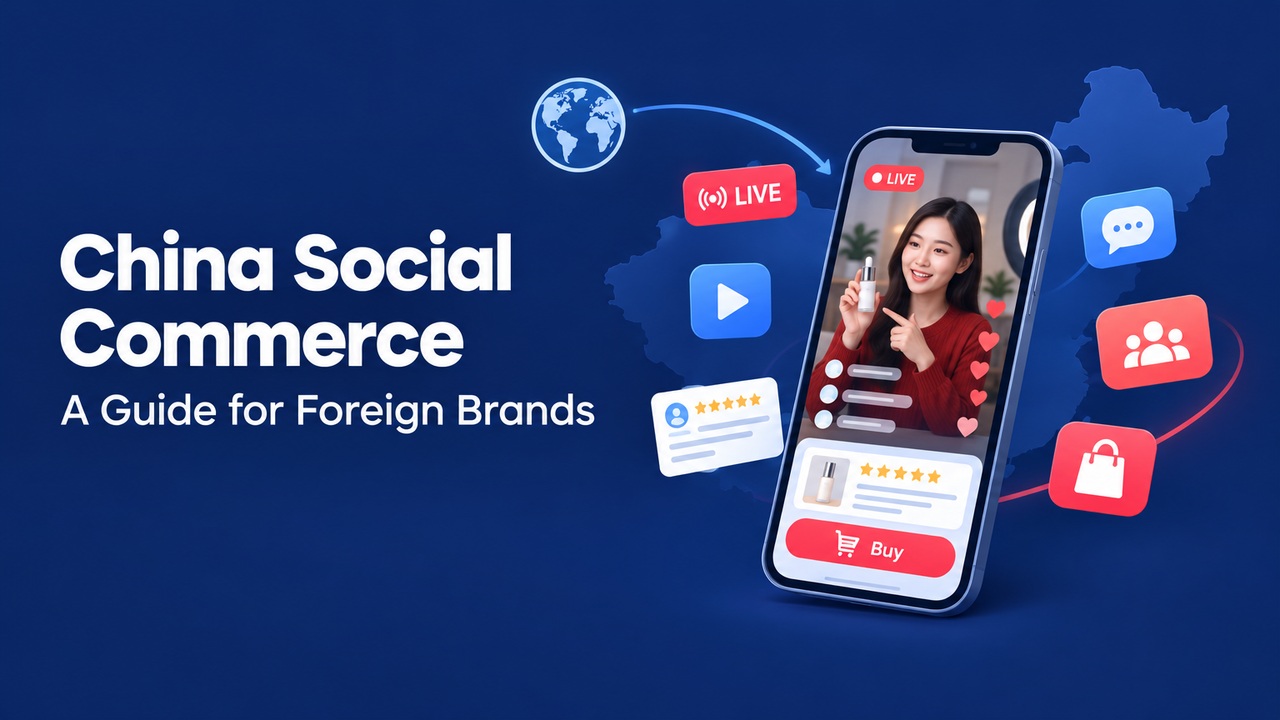
China social commerce is the practice of discovering, evaluating, and buying products inside social and content apps such as WeChat, Douyin, Xiaohongshu, and Kuaishou, often without leaving the app. In China, it is a primary sales channel. Content, community, and checkout sit in one place, so a short video, a livestream, or a user review can turn into an order within minutes.
For foreign brands, this means the app where people find you is usually the app where they pay you. A brand that lists on a marketplace and skips social content misses where many buying decisions are made now.
Background: where China social commerce came from
Social commerce in China grew out of two forces. One was super-apps that combine messaging, payments, and content. The other was a mobile-first population that skipped the desktop e-commerce era Western markets went through. Tencent’s WeChat set the template by putting chat, payment (WeChat Pay), and lightweight in-app storefronts called Mini Programs into one ecosystem. That ecosystem is very large: Tencent reported 1,439 million combined monthly active users for Weixin and WeChat as of 30 June 2026.
Other platforms followed with different models:
- Pinduoduo (now part of PDD Holdings) built its business on team purchasing, where users share deals with friends to unlock lower prices.
- Xiaohongshu (RED) started as a community for sharing overseas shopping tips and became a search engine for lifestyle product reviews.
- Douyin, ByteDance’s Chinese counterpart to TikTok, added in-app stores and livestream selling. Since its first e-commerce ecosystem conference in April 2021, it has marketed this as “interest e-commerce.”
- Kuaishou built livestream commerce around creator-follower loyalty and is especially strong outside China’s top-tier cities. The Kuaishou app averaged 412.3 million daily active users in the second quarter of 2026, according to the company’s results release.
How it works: five things foreign brands need to understand
1. Products are found through content
On Douyin and Xiaohongshu, the algorithm surfaces products through videos, notes, and livestreams more than through search results. A product with no content behind it is close to invisible, even when the listing is set up correctly.
2. Livestream selling drives conversion
In livestream commerce, a host demonstrates products in real time while viewers ask questions and buy through on-screen links. Brands either run their own store livestreams (often called self-broadcasting) or pay creators to feature products. Self-broadcasting gives you more control over price and messaging, while creator streams reach audiences you haven’t built yet.
3. KOLs and KOCs carry trust
A KOL (key opinion leader) is an influencer with a large following. A KOC (key opinion consumer) is an ordinary user whose reviews read like advice from a peer. Chinese consumers routinely check Xiaohongshu notes before they buy, so a base of believable KOC content often matters more than one expensive celebrity post.
4. Private traffic is yours to keep
“Private traffic” means customers you can reach directly, such as WeChat followers, customer groups, and Mini Program members, without paying a platform algorithm every time. It is the closest thing China has to an email list, and it is where repeat purchases come from.
5. Each platform works differently
| Platform | Owner | Core social commerce mechanic |
|---|---|---|
| Tencent | Official Accounts, groups, and Mini Program stores for private traffic and repeat sales | |
| Douyin | ByteDance | Short video and livestream selling through an in-app shop |
| Xiaohongshu (RED) | Xingin | Review-style notes and product research; in-app shopping |
| Kuaishou | Kuaishou Technology | Creator-led livestream selling built on follower loyalty |
| Pinduoduo | PDD Holdings | Group buying and shareable discounts |
Why China social commerce matters for foreign brands
Foreign brands usually hit an awareness problem before a logistics problem. Chinese shoppers may never have heard of your brand, and social platforms are where you build awareness and trust. A Xiaohongshu note explaining why an imported skincare product suits Chinese skin often converts a first-time buyer better than a well-built Tmall listing.
Social commerce also changes channel planning. A common setup pairs a marketplace store on Tmall or JD, which handles credibility and fulfillment, with Douyin and Xiaohongshu content that generates demand, and WeChat keeps those customers coming back. Brands without a Chinese legal entity can often start with cross-border e-commerce, shipping goods from bonded warehouses or overseas. For example, Douyin runs a cross-border program (Douyin Global Shopping) for overseas merchants. Available options depend on the platform and product category, and in 2026 platforms have reportedly tightened verification of overseas production and sales credentials for cross-border sellers.
Compliance also applies. China’s advertising and e-commerce rules cover livestream claims, influencer disclosures, and product advertising, and categories such as health supplements and cosmetics face extra scrutiny.
Related terms people confuse with social commerce
- Cross-border e-commerce is importing and selling to Chinese consumers, for example through Tmall Global. The term describes the import model, not the sales channel, and you can sell cross-border with or without social commerce.
- Livestream e-commerce is one format within social commerce, not a different name for it.
- Influencer marketing means paying creators for exposure. It becomes social commerce once the content links straight to a purchase inside the app.
- Content e-commerce is Douyin’s preferred framing. It overlaps heavily with social commerce but puts the algorithm ahead of the social graph.
Is social commerce right for your China strategy?
The right mix depends on your category, your price point, and whether you have a Chinese entity yet. Some brands should start by seeding content on Xiaohongshu before spending anything on Douyin livestreams. Others need a Tmall or JD store first, so social content has somewhere credible to send buyers. If you’re weighing whether China social commerce fits your plans, Up2China can help you map the platforms, compliance steps, and KOL marketing approach that suit your product, and can handle ongoing social media management once you launch.
FAQ
What is the difference between social commerce in China and in the West?
In China, discovery, payment, and checkout usually happen inside a single app such as Douyin or WeChat. In many Western markets, social platforms still send users to an external website to complete the purchase.
Do I need a Chinese company to sell through social commerce?
Not always. Cross-border models let overseas brands sell on some platforms without a local entity, but eligibility depends on the platform and product category. Check the current rules with each platform and with legal counsel.
Which platform should a foreign brand start with?
For considered purchases like beauty, baby products, and wellness, many teams start with Xiaohongshu to build reviews and search visibility. Douyin suits products that demonstrate well on video. WeChat matters once you have customers worth keeping.
Is livestreaming required to succeed?
No, but it is one of the strongest conversion formats on Douyin and Kuaishou. Plenty of brands test creator livestreams first and move to self-broadcasting once they know what sells.