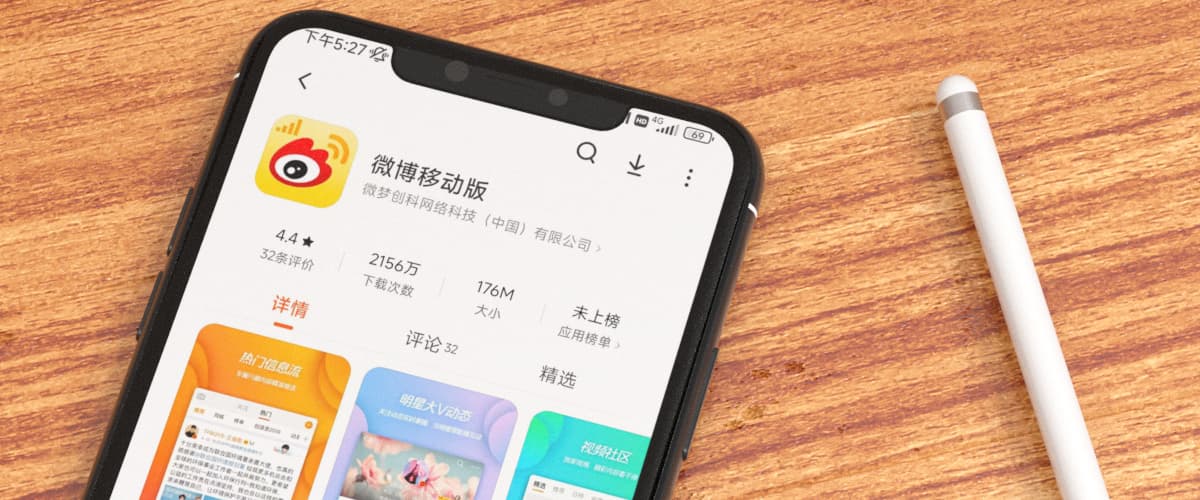
Weibo is a popular microblogging Chinese platform (Similar to Twitter). It was launched in 2009 by Sina Corporation as a platform that allows users to post short text and multimedia updates and follow and interact with each other’s updates.
Since its launch, Weibo has experienced significant growth. As of 2021, Weibo had over 500 million monthly active users, making it one of China’s most popular social media platforms. Most of Weibo’s users are based in China, and the platform is particularly popular among urban, educated, and affluent users. According to data from Weibo, the platform’s user base comprises people aged 18-35, with most users under 24 years old. Additionally, Weibo is used by celebrities, politicians, and businesses to connect with their audience and promote their brands.
Weibo’s primary focus is entertainment and lifestyle content, including celebrity gossip, fashion, beauty, and food. These topics are popular among Weibo’s user base, particularly among women. Additionally, Weibo is often used as a source of information and news, with users discussing current events and trending topics.
Advertising on Weibo
Understand your target audience: Understand the demographics, interests, and behaviors of your target audience on Weibo, and tailor your marketing campaigns accordingly.
Use visually appealing content: Weibo is a highly visual platform, so make sure to use high-quality images and videos in your marketing efforts to grab attention. Utilize influencers: Collaborate with popular Weibo influencers to reach a larger audience and increase the credibility of your brand. Use interactive features: Weibo offers a variety of interactive features such as polls, quizzes, and live streaming, which can help increase engagement with your marketing efforts. Keep an eye on trends: Stay up-to-date with the latest trends and hot topics on Weibo to ensure that your marketing efforts are relevant and timely. Optimize for Weibo Search: Use keywords and hashtags relevant to your brand and target audience to make it easier for users to find your content. Use Weibo Insights: Weibo Insights provides businesses with detailed analytics on the performance of their marketing efforts, so they can measure the success of their campaigns and make adjustments as needed. Be consistent and persistent: Post regularly and engage with your followers to build a loyal community and increase your brand’s visibility.
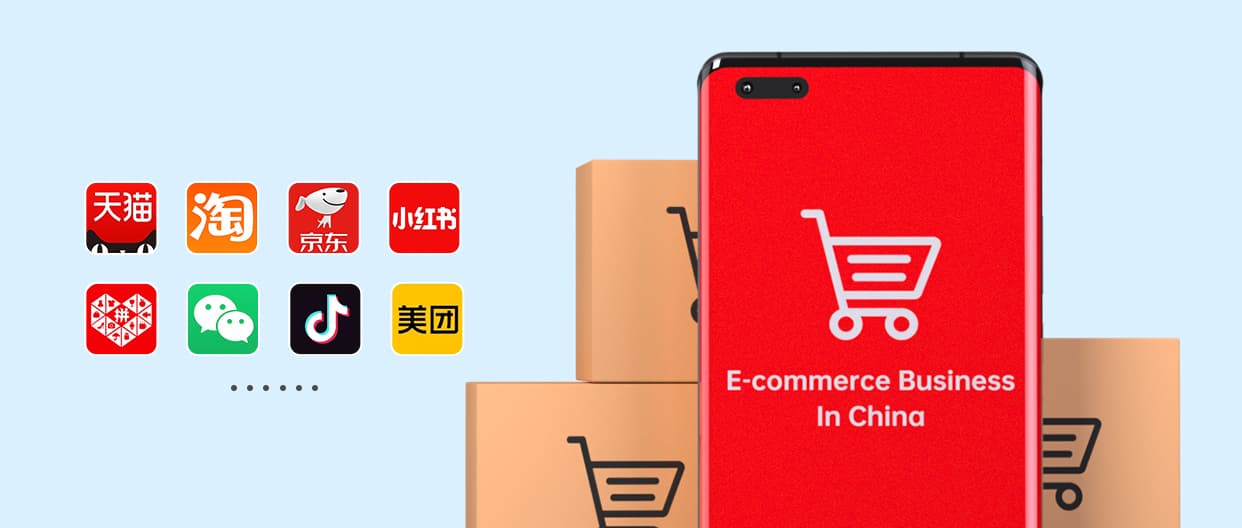
Starting an e-commerce business in China can be a challenging but potentially lucrative venture. Here are a few steps to consider when starting an e-commerce business in China.
Choose your platform
Obtain the necessary licenses and approvals
Establish a Chinese company Or go Cross-border
Understand Chinese consumers
Have a local presence
Consider partnering with a third-party service provider
1.Choose your platform: There are many e-commerce platforms in China, such as Tmall, JD.com, Douyin (TikTok), and more. Choose the platform that best aligns with your target audience and product offering.2.Obtain the necessary licenses and approvals: E-commerce businesses in China are subject to various laws and regulations, so make sure you have obtained the required licenses and consents to operate legally.
3.Establish a Chinese company Or go Cross-border: You will need to set up a Chinese company to operate your e-commerce business in China. There are several options for foreign companies, such as setting up a wholly foreign-owned enterprise (WFOE) or entering into a joint venture with a Chinese partner. Another option is using Cross-border platforms (Tmall Global, Douyin global, etc.). In that case, you don’t need a Chinese company but a Trading Partner (TP agency).
4.Understand Chinese consumers: It’s essential to understand the preferences and behavior of Chinese consumers, as they can differ significantly from those in other countries.5.Have a local presence: Having a local presence in China, such as a physical office, warehouse as well as Chinese social media accounts, can help you better understand and serve the needs of Chinese consumers and create better brand awareness and credibility in the market.6.Consider partnering with a third-party service provider: Several service providers can help foreign companies navigate the complexities of the Chinese e-commerce market.
Zhihu is a Chinese question-and-answer website and mobile app similar to Quora. It was launched in 2010 and has grown to become one of China’s most popular Q&A platforms. It allows users to ask and answer various topics, including technology, science, entertainment, and current events.
The platform also features a voting system where users can vote on the quality of answers, allowing the best answers to rise to the top.
Zhihu also has a feature called “Ask to answer,” where users can invite experts in a specific field to answer their questions. Another feature is “Live,” a live-streaming feature where users can watch live Q&A sessions with experts.
Key Insights on Zhihu
As of 2021, Zhihu has over 300 million registered users and is considered one of the largest Q&A platforms in China.
By the end of 2021, Zhihu had over 200 million monthly active users, making it the second most popular Q&A platform in China after Baidu Zhidao.
Zhihu’s mobile app has been downloaded over 100 million times on China’s iOS App Store and Google Play Store.
In 2021, Zhihu announced that it had achieved profitability for the first time since its founding, with revenues of $100 million.
Zhihu has a large user base of highly educated people, with over 60% of its users having a bachelor’s degree or higher.
According to Zhihu, by the end of 2021, the number of people watching live-streaming on Zhihu exceeded 100 million.
Zhihu has also expanded into other areas, such as e-commerce, and has launched a service that allows users to buy products recommended by experts on the platform.
Zhihu E-commerce
Zhihu has expanded into e-commerce recently by allowing users to buy products recommended by experts on the platform. The platform’s e-commerce function is called “Zhihu Mall,” which enables users to purchase products directly on the platform, such as books, courses, and other products recommended by experts. The platform also allows users to ask questions to experts about the products before making a purchase, which is one of the features that sets it apart from other e-commerce platforms.
The e-commerce function on Zhihu is still in the early stages of development, and it’s less mature than other Chinese e-commerce platforms, but it has a growing user base, and it’s expected to have a promising future. The platform also plans to leverage its large user base and the high level of trust among its users to generate sales.
Zhihu has also established partnerships with various brands, publishers, and educational institutions to offer exclusive content and products for its users. Additionally, Zhihu allows its users to make purchases with its virtual currency called “Zhihu Coin,” which can be earned by participating in certain activities on the platform.
According to a recent survey, more than 90% of respondents plan to buy New Year’s goods this year, with most budgeting 501-2000 CNY. The survey also found that “buying health” has become the primary trend in purchasing New Year’s goods and giving gifts. Respondents listed nutrition, health care products, and traditional New Year goods such as snacks, nuts, drinks, fresh fruits, and meat as their top choices.
Consumers are paying more attention to the health factors of these products, such as whether they are purely natural, non-additive, sugar-free or low-sugar, non-fried, or zero fat and zero calories. The ongoing pandemic has accelerated consumers’ health awareness, and demand for nutrition and health preservation has also gradually increased.
Quality Remains a Priority
Quality remains a core consumer demand, and many choose to buy goods both online and offline. Online e-commerce platforms (mainly Taobao, JD, Douyin, and Pinduoduo), instant retail platforms (Meituan), and community group buying (WeChat) have become the main purchase channels for New Year’s goods. Businesses should pay closer attention to the future development of online markets. Product quality, price, healthiness, and convenience are the main factors that affect consumers’ purchasing decisions.
Pre-prepared Meals Emerge as a Popular Choice for New Year’s Eve Dinner
Pre-prepared dishes have also become a new favorite for New Year’s Eve dinner, with 26.91% of surveyed users choosing to buy them. Offline supermarkets and online platforms have seen a sharp increase in orders for pre-prepared dishes. China’s pre-prepared dishes market reached 419.6 billion CNY in 2022, up 21.3% year on year, and is expected to continue strong growth.
Zodiac and China-Chic Elements Drive Popularity in New Year Product Trends
The recent survey data indicates that most respondents intend to purchase “Spring Festival Exclusive” New Year products, with a preference for those featuring traditional Chinese elements, China-Chic style, and Chinese zodiac elements. These products, which incorporate China-Chic and Zodiac elements, have seen a significant price increase. Despite this, most respondents are willing to pay more for these exclusive products because they see them as conveying New Year’s wishes.
Tmall is a business-to-consumer (B2C) online marketplace operated by Alibaba Group, a Chinese multinational conglomerate. It was launched in 2008 and has become one of China’s largest online marketplaces. As of 2021, Tmall has over 500 million monthly active users.
Tmall is designed for businesses to sell their products directly to consumers. It features many products, including fashion, home goods, electronics, and more. Tmall has a number of features that cater to specific product categories or user groups, such as “Tmall Global” for international brands, “Tmall Supermarket” for groceries and household items, and “Tmall Luxury Pavilion” for high-end luxury brands.
In addition to its e-commerce functionality, Tmall offers several services to help businesses establish and grow their online presence, such as marketing tools and customer support. Tmall is known for its high standards for sellers, which helps to ensure a good user experience for buyers.
Advertising on T-mall
There are several ways to advertise on T-mall
Sponsored Products: You can use Tmall’s sponsored products feature to have your products appear at the top of search results or in product recommendation lists.
Brand Zone: You can create a branded landing page on Tmall that showcases your products and brand story.
T-mall Super Brand Day: You can participate in Tmall’s Super Brand Day event, a promotional event that features discounts and special deals from selected brands.
Tmall Global Launchpad: You can use Tmall’s Global Launchpad feature to launch your products in the Chinese market.
Tmall Global Influencer Program: You can partner with influencers to promote your products on Tmall.
5 Tips for advertising on T-mall
1.Research your target audience: Make sure you understand who your target audience is and how to reach them on Tmall.2.Use visually appealing content: Tmall is a very visual platform, so use high-quality images and videos to catch users’ attention.3.Offer value: Instead of just promoting your products, try to provide value to your audience through educational content or proper tools.4.Test different ad formats: Experiment with different ad formats, such as sponsored products and branded landing pages, to see what works best for your business.5.Use Tmall analytics: Tmall provides tools that can help track your advertising campaigns’ effectiveness.
1. WeChat was launched in 2011 by Tencent, a Chinese multinational conglomerate.
2.As of 2021, WeChat has over 1.2 billion, monthly active users.
3. WeChat is more than just a messaging app; it is a multi-purpose platform that combines messaging, social media, and mobile payment functionality.
4. WeChat allows users to make voice and video calls, send text and multimedia messages, and share location information.5. WeChat has a “Moments” feature similar to Facebook’s “News Feed,” allowing users to post photos and updates for their friends to see.
6. WeChat has a “WeChat Pay” feature that allows users to make mobile payments directly through the app.
7. WeChat has a “WeChat Out” feature that allows users to make international calls at low rates.
8. WeChat has a feature called “WeChat Mini Programs” that allows users to access a wide range of services, such as ordering food delivery or booking a hotel room, directly within the app.
9. WeChat has a “WeChat Work” feature designed for businesses and allows collaboration, file sharing, and project management.10. WeChat has been blocked in countries such as India and Iran due to national security concerns.
Advertising on WeChat
There are several ways to advertise on WeChat
Official Account
You can create an official account for your business and use it to publish articles, send messages, and interact with followers.
WeChat Mini Programs
You can create a WeChat Mini Program for your business and use it to reach potential customers.
WeChat Moments Ads
You can create a sponsored post that appears in users’ Moments feeds.
WeChat Pay
You can use WeChat Pay to offer promotions and discounts to customers who pay with the app.
5 Tips for advertising on WeChat
1. Target the right audience: Ensure you understand your target audience and how to reach them on WeChat.2. Use visually appealing content: WeChat is a very visual platform, so use high-quality images and videos to catch users’ attention.3. Offer value: Instead of just promoting your products or services, try to provide value to your audience through educational content or proper tools.4. Test different ad formats: Experiment with other ad formats, such as sponsored posts and Mini Programs, to see what works best for your business.5. Use WeChat analytics: WeChat provides analytics tools that can help you track the effectiveness of your advertising campaigns.
Kuaishou (also known as Kwai in some regions) is a popular Chinese video-sharing platform and social media app. It was launched in 2011 and has since become one of the largest and most popular social media platforms in China, with a particularly strong user base in smaller cities and rural areas.
On Kuaishou, users can create and share short videos, typically featuring themselves or their everyday lives. The app also has various interactive features, including live streaming, challenges, and virtual gifts, which users can send to their favorite creators.
In addition to its core video-sharing function, Kuaishou has also expanded into other areas, such as e-commerce, gaming, and entertainment. It has a strong focus on user-generated content and has a loyal user base, many of whom use the app as a primary source of entertainment and connection with others.
410 billion CNY in GMV predicted for Kuaishou e-commerce in 2022
Kuaishou e-commerce is predicted to generate a gross merchandise value (GMV) of 410 billion CNY in 2022, a year-over-year increase of 26%. This growth is supported by Kuaishou’s solid user base, with an average of 626 million monthly active users in Q3 2021, a 9.3% increase from the previous year. Kuaishou’s monthly active buyers have exceeded 100 million, experiencing nearly 40% year-on-year growth. This exceeds the company’s target for monthly active buyers. While GMV is an essential metric for Kuaishou e-commerce, the platform also tracks the number of monthly active buyers as a key indicator of its e-commerce user base. As Kuaishou continues to expand and deepen its e-commerce offerings, it is likely to see further growth in GMV through the contributions of these new users.
What’s holding back Kuaishou’s e-commerce growth?
Kuaishou e-commerce has seen steady growth in recent years but has yet to achieve the same breakthrough as competitors like Little Red Book and Bilibili. Factors such as corporate culture and organizational efficiency may play a role in this slow development, but the core issue is the quality and availability of products. Kuaishou’s supply chain and control over goods need to be improved, a common challenge faced by content platforms transitioning to e-commerce.
Before the annual Double 11 shopping event, Kuaishou restored its connections with the Taobao Alliance and JD Alliance, and the positive impact on its e-commerce ecosystem was clear. Kuaishou’s stock-keeping units (SKUs) increased after the outbound links were restored. However, relying on outbound links is not a sustainable solution for expanding product categories. To build a complete e-commerce ecosystem, Kuaishou must address weaknesses in its supply chain.
In its third-quarter financial report, Kuaishou made it clear that fully developing e-commerce and improving the quality of its products is a top priority.
Boost live broadcast e-commerce with accelerated development
Kuaishou briefly tested a shopping mall channel in August 2022 but took it offline again shortly after the Double 11 shopping event. The plan is first to improve the company’s understanding and control of goods and cultivate user behavior and market awareness for merchants and brands before relaunching mall services when these capabilities mature.
In the meantime, Kuaishou has been focusing on the growth of its live broadcast e-commerce. The Kuaishou industry has seen a recent surge in live broadcasts, and Kuaishou e-commerce has announced plans to support 1000 new merchants and 100 new broadcasters who reach one million GMV.
Welfare policies have attracted more manufacturers to Kuaishou, but the company still faces the challenge of sustaining this growth in the long term.
“It wasn’t overnight; It was a long-shot decision and many sacrifices to build the company and get the trust of both employees and customers. With hard work and strong belief, we managed to do it.”
https://www.up2china.com/head/u2c.mp4 Shlomi:
”After completing my degree at the Hebrew University, I received a scholarship to study Chinese in Chengdu and decided to move to China with my wife. However, shortly after beginning my studies, I discovered my desire to become an entrepreneur and started my first venture – an electric car-sharing company in Chengdu. Unfortunately, I quickly realized that the project was beyond my abilities and experience, so I transitioned to consulting for an Israeli startup accelerator in Chengdu. There, I met Dean and shared my idea of starting a marketing agency to help international brands enter the Chinese market through social media. Dean was open to the idea, and we began working on it together.” Dean:
”Throughout my career, I have gained experience in various industries, including technology research, development, and management in large state-owned enterprises and research institutes, as well as work in a significant local advertising group. However, I also had the unfortunate experience of failing two startup ventures. Both companies had solid business plans and received recognition from investors, but ultimately could not turn their goals into successful businesses. I was working in the IT team of a gaming startup when I met Shlomi and was immediately impressed by his intelligence. When he shared his idea of assisting foreign companies in entering the Chinese social media market, I saw the potential for a successful business.”
Shlomi and Dean had a somewhat vague vision when they founded Up2China. They knew they wanted to start a business and generate revenue, but they needed a clear plan for where they wanted the company to be in the next few years. Despite this uncertainty, they established a basic company structure, signed one employee, and a single desk for an office. The early days of Up2China were challenging, as the founders had no investment, no government support, and no distinctive technological capabilities. Building a company from scratch is always difficult. Still, Shlomi and Dean laid the foundations for a successful business by establishing a solid business model and developing the necessary industry resources and professional skills.
Not long after starting their business, they recognized the potential of e-commerce in China and decided to focus on that. Thanks to the trust of some early customers, they were able to develop comprehensive Chinese e-commerce management and technology solutions. Today, the company has more than 60 employees and, after seven years in operation, has gained recognition for its successful case studies. This caught the attention of the Tmall Global business development team, leading to more recommendations and clients and positioning the company as one of the top trading partner enablers for health supplement products in Europe.
Q&A with Up2china Co-Founders
1. How’s Shlomi/Dean as a partner? What is his best attribute? Shlomi: ” Dean is an excellent partner, and we complement each other well. I tend to be more active in seeking new opportunities and perhaps more demanding with the team, while Dean is calmer and balances the pressure with a unique management style. I think our employees benefit from being exposed to both approaches, as it helps them grow. Dean’s greatest attribute is his patience. He understands that implementing new ideas takes time and always has the team’s success and growth in mind.”
Dean: “Our collaboration is a great complementary model. When I first met Shlomi, I was impressed by his wisdom, and over the years, I have come to appreciate his many excellent qualities (as well as some of his less favorable traits ;)). Nonetheless, overall, I believe we work well together.” 2. When did you realize you’re doing something right? Shlomi: “I knew we were doing something right when we closed our first big client. Five years ago, I realized that we have something that many other trading partner agencies don’t have – the ability to build strong trust with our clients.”
Dean: “After we closed our first client and earned 3000$, I realized this was a legitimate business.” 3. What is the most fulfilling part of your day? Shlomi: “The most satisfying part of my day is waking up with a passion for my work. I love what I do and couldn’t ask for more than to continue enjoying it every day.”
Dean: “I feel a sense of accomplishment when I have successfully taken care of the daily details of the business. Another source of fulfillment for me is coming up with ways to create more value for our team and clients.” 4. What inspires you? Shlomi: “I am inspired by the people on our team and the milestones we have achieved. We have come a long way from a small room with just a few employees, and it wouldn’t have been possible without our clients who believed in us and our dedicated team who give their all every day to make it happen.”
Dean: “I’m inspired by what the future holds for us. .” 5. 3 Goals for the future Shlomi: “Our goals for the future include continuing to grow, providing significant value to our loyal clients, and being the best platform for personal development for our company co-founders and team. We want to be happy and fulfilled in our work while bringing value to our customers and team. Specific goals include:
• Continuing our growth
• Becoming a more data-driven organization
• Embracing independence and empowering each employee to be their own CEO.”
Dean: “We hope to see our team become more intelligent, determined, professional, and able to enjoy the fruits of their hard work. We also aim to create even more value for our customers. By achieving these goals, I will feel more relaxed and fulfilled.”
In recent years, consumer awareness of men’s care has risen, and the market space is enormous. According to Euromonitor International, the China men’s care market is experiencing steady growth and is expected to exceed 15 billion yuan by 2025.
The men’s care industry presents five trends:
1. The development of the industry is still at an early stage. Although the number of consumers who buy men’s care products has significantly increased, the current volume is small, and there is still much room for growth.2. Consumers are not only men with needs but also women. This product meets the needs of “love gifts” and “mature wife family care,” both becoming one of the main consumption groups.3. Businesses pay more attention. This year, Tmall Double 11, the number of men’s care products and merchants has reached a new level, and many businesses have started stocking up and operating early.4. Challenges accompany opportunities. In recent years, new brands have emerged, more male care needs have been discovered, and many international brands that initially focused on the female market have expanded men-product lines.5. The traditional recommendation model is more suitable for women’s emotional consumption needs, and a series of marketing methods for men’s consumption habits are being valued and improvedIn this year’s Double 11, the entire men’s care industry was more prepared, the number of participating merchants was more significant, and the volume of high-quality goods proliferated. In the past, the men’s care business could have been better at membership operation, and the frequency of brand broadcasting could have been higher. However, since the beginning of this year, the broadcasting rate of quality sellers in the industry on Tmall has reached 70%. During the Double 11 period, a self-broadcasting ranking competition was exclusive to men’s care brands. Merchants are more willing to invest in self-broadcasting and membership. In the past year, nine men’s care brands on Tmall have exceeded 100 million yuan in sales; This year, Tmall’s 618 men’s grooming transactions increased by 20 times.
Around 2006, many scholars began to pay attention to the demand for men’s beauty care products. It was mentioned that the need for men’s beauty cosmetics was increasing then, and each significant cosmetics brand launched men’s cosmetics. However, compared with the international fashion trend, Chinese men’s beauty was still in a stage of consumption guidance and enlightenment. Every year, 30 million men buy skin care products on Tmall, and there are 40 million potential consumers to be tapped. The proportion of new customers reaches 70%, and many are directly transferred from beauty and skin care. They will be more willing to buy “men’s only” products when the quality is good.This year’s Double 11 Tmall has added many lists related to men’s care. Men are more rational and have more purpose in shopping. Therefore, a more segmented and intuitive trend shopping guide is made on Tmall’s website, similar to the launch of detailed Tmall lists, Double 11 must-buy lists, to let male users have explicit reference opinions when searching for goods and help them make faster purchase decisions. At the same time, men have high brand loyalty. Once they recognize a brand, they will generally continue to use it and will be less affected by discount promotions. Males have a very high conversion rate, so it’s necessary to join the must-buy list and Tmall list to have a reference way.
According to the seventh national census, there were 267 million people aged 60+ in China by the end of 2021, 18.7 % of the total population. Elders have become a consumption group that cannot be ignored. The consumption potential of China’s elderly population is expected to grow to about 106 trillion RMB by 2050.By December 2021, Internet users aged 60+ in China had reached 119 million, and the Internet penetration rate was 43.2%. At the same time, 99.5% of Internet users aged 60+ used mobile phones to access the Internet, basically the same as the proportion of all Internet users.In August 2022, the number of monthly active elderly users reached 297 million, an increase of 12.5% compared with last year. The average monthly usage time was 121.6 hours, an increase of 8.6%, significantly higher than the intermediate level of the whole network.
By the end of 2021, 115 websites and 43 apps were upgraded for aging and accessibility. Therefore, in the second half of 2021, platforms such as Douyin, WeChat, Weibo, Meituan, and Taobao have launched old-age models such as care mode, elderly version, or prominent character concise version.In April 2022, the Ministry of Industry and Information Technology also disclosed that the first 325 websites and apps closely related to the life of the elderly had completed the transformation.
So far, the elder still faces some online shopping problems, such as inconvenient customer service communication, return issues, and easy-to-buy faulty and inferior product. Therefore, each platform needs to make more measures and improvements for the needs of the elders, as it seems like they’re a big part of the e-commerce market in China.