Contact Us

Category: Blogs

  • Cracking the Code:  How International Brands Can Succeed in China’s E-Commerce Market

    Cracking the Code: How International Brands Can Succeed in China’s E-Commerce Market

    China’s e-commerce market is a powerhouse. With over 1 billion internet users and the highest online retail sales globally, it’s a goldmine for international brands. Yet, entering this vast and dynamic market isn’t a simple plug-and-play scenario. To succeed, brands must navigate a unique ecosystem, understand consumer behavior, and adapt to ever-evolving market trends.

    This article will uncover the nuances of China’s e-commerce market, key challenges international brands face, and strategies to thrive.

    Understanding China’s E-Commerce Landscape

    Unlike other markets, China’s e-commerce ecosystem revolves around a few dominant platforms and countless niche channels. Here are the primary players:

    1. Tmall & JD.com:
    The giants of B2C e-commerce in China, these platforms offer brands access to vast consumer bases. Tmall emphasizes premium branding and brand-owned storefronts, while JD.com focuses on logistics and quick delivery.

    2. Douyin (China’s TikTok):
    Douyin has become a powerful social commerce platform beyond entertainment. Live streams, short videos, and influencer collaborations allow brands to connect directly with consumers and drive conversions.

    3. Xiaohongshu (Little Red Book):
    A mix of social media and e-commerce, Xiaohongshu is known for its community-driven content, with influencers sharing product recommendations. It’s a prime platform for beauty, fashion, and lifestyle brands.

    4. Pinduoduo:
    Targeting price-sensitive consumers, Pinduoduo thrives on group-buying deals. It’s an excellent option for brands looking to tap into tier-3 and tier-4 cities.

    5. WeChat & WeChat Mini Programs:
    China’s most popular app offers e-commerce solutions through mini-programs, enabling seamless transactions within the app.

    Key Challenges for International Brands

    While the opportunities are immense, entering the Chinese market comes with its own set of challenges:

    1. Cultural and Consumer Behavior Differences:
    Chinese consumers are highly digital-savvy and demand instant gratification. They value authenticity, innovation, and social proof.

    2. Fierce Competition:
    Local brands dominate the market with a deep understanding of consumers, competitive pricing, and fast product innovation cycles.

    3. Complex Regulatory Environment:
    From product compliance to data regulations, navigating China’s legal framework can be daunting for newcomers.

    4. Platform Dynamics:
    Each platform has unique rules, algorithms, and requirements for brand success. Learning and adapting to these dynamics is essential.

    5. Brand Positioning:
    Western branding doesn’t always resonate with Chinese audiences. Tailoring messaging to suit local preferences is critical.

    Strategies to Crack the Code

    International brands can overcome these challenges by adopting targeted strategies:

    1. Leverage the Right Platforms:
    • For premium positioning, invest in Tmall.
    • To engage younger, trend-driven audiences, use Douyin and Xiaohongshu.
    • If targeting affordability-focused markets, explore Pinduoduo.

    2. Invest in Localized Marketing:
    • Develop campaigns that align with Chinese festivals (e.g., Singles’ Day, 618 Festival).
    • Use KOLs (Key Opinion Leaders) and KOCs (Key Opinion Consumers) to build trust and authenticity.
    • Tailor messaging to highlight product benefits that resonate with Chinese values, such as family, health, or social status.

    3. Optimize with Data:
    • Use tools like Digate (or similar e-commerce analytics platforms) to analyze performance, identify trends, and refine strategies.
    • Track consumer behavior through social listening tools and adjust marketing campaigns accordingly.

    4. Adopt an Omnichannel Strategy:
    • Combine online and offline touchpoints to provide a seamless shopping experience.
    • Use WeChat Mini Programs to build loyalty and re-engage customers.

    5. Streamline Operations:
    • Partner with a Trading Partner (TP) like Up2China to manage e-commerce operations, regulatory compliance, and supply chain logistics.
    • Focus on building a strong D2C infrastructure for long-term growth.

    Case Study: Success in Action

    Take the example of Cardo, a leading brand in motorcycle communication devices. By leveraging localized strategies on platforms like Tmall and Douyin, Cardo established a strong market presence in China. Working with a trusted TP ensured smooth operations, while collaborations with KOLs and data-driven campaigns helped build brand trust and drive conversions.

    The Path to Success

    Cracking the Chinese e-commerce market is not an overnight journey. It requires careful planning, localized strategies, and adaptability. Brands that invest in understanding the market, leveraging the right platforms, and collaborating with experienced partners will unlock China’s immense potential.

    The rewards for international brands ready to take the plunge are unparalleled: access to the world’s most extensive consumer base, exponential growth opportunities, and the chance to establish a global presence.

    Are you ready to take the first step? Let’s navigate this exciting market together and turn challenges into opportunities.

  • Top 5 Trends Shaping China’s E-Commerce Market in 2025: A Guide for International Brands

    Top 5 Trends Shaping China’s E-Commerce Market in 2025: A Guide for International Brands

    China’s e-commerce market is the largest and most dynamic globally, constantly reshaped by innovation, consumer behavior, and digital trends. As we head into 2025, understanding the key trends is essential for international brands looking to make their mark. From livestream shopping to sustainability and AI-driven personalization, these trends will define how brands succeed in this competitive landscape.

    Here are the top five trends shaping China’s e-commerce market 2025 and how international brands can leverage them.

    1. Livestream Shopping: The New Standard for Consumer Engagement

    Livestream shopping continues to dominate as a powerful way to connect with consumers. Platforms like Douyin (TikTok China), Taobao Live, and Kuaishou are evolving to offer even more interactive experiences.

    Why It Matters: Livestream shopping combines entertainment with instant purchasing, creating urgency and trust through influencer-driven content.

    Key Developments in 2025:

    · Enhanced AR/VR features in live streams allow consumers to virtually “try before buying.”

    · Micro-live streams target niche audiences, creating more personalized engagement opportunities.

    How Brands Can Leverage This Trend:

    Partner with Key Opinion Leaders (KOLs) and niche Key Opinion Consumers (KOCs) to host tailored livestream events. Showcase your product’s unique selling points authentically and entertainingly to drive conversions.

    2. AI-Driven Personalization: Meeting Every Consumer’s Unique Needs

    AI is transforming how e-commerce platforms interact with users. It offers hyper-personalized experiences based on browsing history, purchase behavior, and real-time preferences.

    Why It Matters:  Chinese consumers expect seamless, curated shopping journeys tailored to them.
    Key Developments in 2025:
    · AI-powered intelligent recommendations that dynamically adjust based on a consumer’s real-time interactions.
    · Voice and chatbot commerce allows consumers to shop directly through voice assistants like AliGenie or Xiaodu.

    How Brands Can Leverage This Trend:

    Optimize your presence on platforms like JD.com and Tmall, which invest heavily in AI technology. Use AI tools to create targeted ad campaigns and provide personalized shopping experiences that resonate with Chinese consumers.

    3. Sustainability in E-Commerce: The Rise of Conscious Consumers

    Sustainability has moved from a niche concern to a mainstream priority for Chinese shoppers. Eco-conscious consumers are demanding transparency in sourcing, packaging, and production.

    Why It Matters:  A growing middle class and younger consumers are willing to pay a premium for sustainable products.
    Key Developments in 2025:
    · Increased adoption of green logistics, including recyclable packaging and carbon-neutral shipping.
    · Platforms like Pinduoduo are introducing “green” categories to promote sustainable brands.

    How Brands Can Leverage This Trend:

    Highlight your brand’s commitment to sustainability through localized marketing campaigns. For example, emphasize eco-friendly packaging or partnerships with green initiatives in China. This not only builds trust but also aligns your brand with consumer values.

    4. The Rise of Niche Platforms: Tapping into Targeted Demographics

    While giants like Tmall and JD.com remain dominant, niche platforms like Xiaohongshu (Little Red Book) and Bilibili rapidly gain ground among specific demographics.

    Why It Matters:  These platforms allow brands to reach younger, trend-focused consumers through community-driven content and social commerce.
    Key Developments in 2025:
    · Xiaohongshu’s e-commerce capabilities expand, making it easier for international brands to sell directly on the platform.
    · Integration of Bilibili’s long-form video content with shoppable links for deeper storytelling.

    How Brands Can Leverage This Trend:

    Tailor your content for these platforms, focusing on authenticity and storytelling. For example, Xiaohongshu can be used for user-generated reviews and lifestyle-oriented posts while leveraging Bilibili for in-depth brand stories.

    5. Omnichannel Integration: Bridging Online and Offline Experiences

    The line between online and offline shopping is blurring, with Chinese consumers expecting seamless integration across all touchpoints.

    Why It Matters:  E-commerce platforms are evolving into ecosystems combining digital convenience and offline experiences.
    Key Developments in 2025:
    · Growth of O2O (Online-to-Offline) services, including “shop online, pick up in-store” options and immersive retail experiences.
    · Innovative retail stores powered by AI and IoT to enhance in-store engagement.

    How Brands Can Leverage This Trend:

    Adopt an omnichannel approach by integrating your e-commerce presence with offline experiences. Collaborate with platforms like WeChat to offer mini-programs that link your brand’s online store with offline retail locations.

    Conclusion: Navigating the Future of China’s E-Commerce

    China’s e-commerce market in 2025 will offer international brands many opportunities but challenges. Success requires more than just entering the market; it demands staying ahead of trends, understanding consumer expectations, and adapting strategies to this ever-evolving landscape.
    By embracing livestream shopping, leveraging AI-driven personalization, committing to sustainability, targeting niche platforms, and integrating online and offline strategies, international brands can unlock the immense potential of the Chinese market.

    Ready to thrive in China’s e-commerce market? Let’s navigate the trends together and craft a winning strategy for 2025.

  • Data as the Driving Force:  Supporting International Brands During Chinese E-Commerce Events

    Data as the Driving Force: Supporting International Brands During Chinese E-Commerce Events

    Data management has become a strategic imperative for international brands operating in China, particularly during high-intensity events like Double 11. With millions of consumers engaging in real-time transactions, brands must have robust systems to quickly process and analyze vast amounts of data. Platforms like Alibaba’s Tmall and JD.com provide analytics dashboards that enable brands to track sales performance, customer demographics, and conversion rates in real-time. By leveraging this data, brands can make informed decisions, such as optimizing inventory allocation and adjusting marketing strategies on the fly.

    Localized data analysis is another critical aspect of succeeding in China’s diverse market. Consumer preferences vary widely across regions, and brands that tailor their offerings to match local tastes and trends often outperform competitors. Predictive analytics tools can help brands anticipate demand surges and plan inventory and logistics accordingly. For example, understanding that a particular product category performs well in southern China but less so in the north can guide targeted promotional efforts.Compliance with China’s strict data security regulations is essential for international brands. Regulations such as the Personal Information Protection Law (PIPL) and the Cybersecurity Law require companies to handle consumer data responsibly and securely. Brands that fail to comply risk heavy penalties and reputational damage. Therefore, investing in secure data management systems that align with local legal requirements is non-negotiable.Finally, data insights empower brands to optimize the customer journey. They provide the flexibility to craft localized marketing campaigns, personalize the shopping experience, and build stronger connections with their audience. From pre-event teasers to post-event feedback, data-driven decision-making allows international brands to adapt to the fast-paced Chinese e-commerce environment and achieve long-term success.

  • Winning Marketing Strategies: Lessons from Double 11, 2024

    Winning Marketing Strategies: Lessons from Double 11, 2024

    Double 11, 2024, taught marketers how to leverage digital tools and trends to capture consumer attention and drive sales. A significant takeaway from this year’s event was the expanded role of generative AI in creating hyper-personalized shopping experiences. Many brands used AI to generate tailored recommendations, dynamic pricing strategies, and customized promotional content, resulting in higher engagement rates and conversions.

    Livestreaming continued to be a pivotal element of success, with influencers attracting millions of viewers to their broadcasts. The most triumphant campaigns intertwined storytelling with interactive shopping experiences, enabling viewers to directly purchase products featured in the stream. This format fostered impulsive buying and deepened consumer trust in both the products and the influencers endorsing them. The addition of gamification further heightened engagement, with brands offering digital games, quizzes, and challenges that rewarded participants with discounts or exclusive offers.Social commerce platforms like Xiaohongshu and Douyin (TikTok China) emerged as dominant forces in shaping consumer preferences. By blending entertainment with seamless e-commerce functionalities, these platforms allowed brands to tap into younger, digitally savvy audiences. User-generated content (UGC) campaigns were particularly effective, as consumers increasingly trusted peer reviews and recommendations over traditional advertisements.The importance of a mobile-first strategy cannot be overstated for international marketers. Over 80% of transactions occurred via mobile devices, underscoring the need for apps and websites optimized for speed, usability, and secure payment options. Marketers who invested in mobile strategies, localized content, and responsive customer support were well-positioned to capitalize on this massive shopping event.

  • Record-Breaking Sales and Emerging Trends: Double 11, 2024 in China

    Record-Breaking Sales and Emerging Trends: Double 11, 2024 in China

    Double 11, 2024, also known as Singles’ Day, once again solidified its position as the world’s largest e-commerce extravaganza. This year, sales exceeded expectations, driven by the rising purchasing power of consumers in lower-tier cities and rural areas, supported by China’s rapid digitalization. Major platforms like Alibaba, JD.com, and Pinduoduo reported record-breaking sales, underscoring the continued growth of the e-commerce sector despite global economic uncertainties.

    A defining feature of this year’s event was the focus on consumer experience. AI-driven personalization was crucial in recommending products and creating tailored shopping experiences. Livestreaming continued to dominate, with influencers hosting marathon sessions to showcase products in real-time. To sustain consumer engagement, many platforms introduced gamified experiences, such as interactive red envelope giveaways. Meanwhile, cross-platform collaborations enhanced the visibility of smaller brands and introduced new revenue channels.Sustainability took center stage during the 2024 festival. Eco-conscious consumers prompted platforms to prioritize environmentally friendly initiatives, including green packaging and carbon-neutral delivery options. Luxury brands also embraced these trends, offering limited-edition products emphasizing ethical sourcing and sustainability. These efforts aligned with China’s broader goals of promoting green consumption and reducing carbon footprints.International brands faced both challenges and opportunities. While the competition was intense, those who successfully localized their strategies—adapting to regional preferences, embracing local platforms, and collaborating with key opinion leaders (KOLs)—enjoyed significant growth; for businesses aiming to succeed in this competitive space, understanding and adapting to the fast-evolving Chinese e-commerce ecosystem remains essential.

  • Double 11 2024: Record Sales and Key Insights

    Double 11 2024: Record Sales and Key Insights

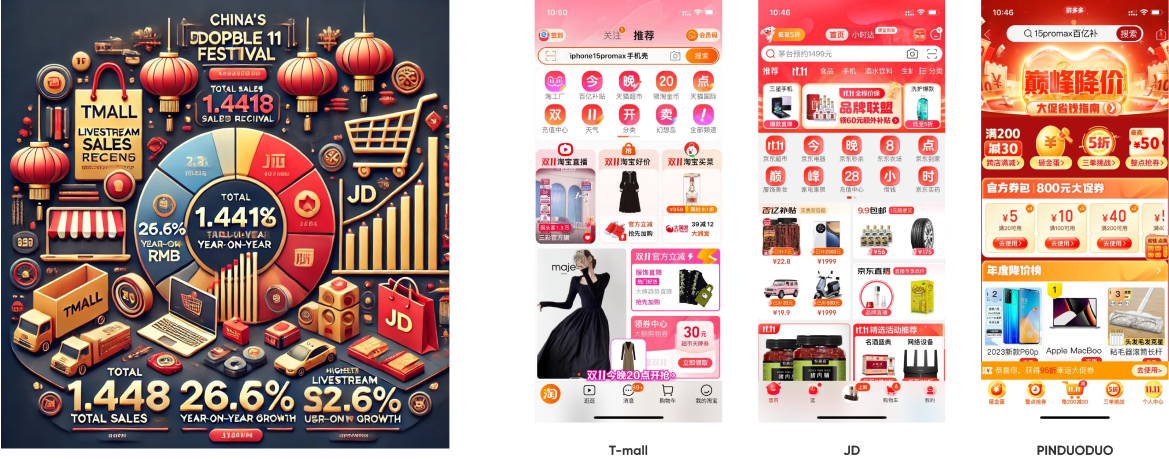
    This year, Double 11 set new benchmarks for e-commerce, with total sales across all platforms reaching an impressive 1.4418 trillion RMB, reflecting year-on-year growth of 26.6%. Among the top-performing categories, home appliances, mobile phones and digital products, clothing, and personal care and beauty stood out, each achieving growth exceeding 20%.

    Livestreaming Revolutionizes Sales

    Tmall witnessed remarkable achievements:

    • 589 brands surpassed 100 million RMB in sales, breaking previous records.
    • In the sports and outdoor category, 15 brands hit the 100 million RMB mark within the first four hours of sales.
    • The beauty sector saw explosive growth, with 79 brands exceeding 100 million RMB, while 7,062 apparel brands doubled their sales.

    JD’s Outstanding Growth

    JD also showcased impressive results:

    •  A 20% increase in shopping users, alongside a 3.8x rise in sales through livestreaming.
    •  Over 17,000 brands achieved over 5x growth, while 30,000 small and medium-sized merchants doubled their sales.
    •  Sales of categories such as robotic vacuums and dryers surged by 200%, and AI hardware, including computers and smartphones, grew by over 100%.

    Pinduoduo’s Subsidy Strategy

    Pinduoduo’s innovative “Billion Dollar Consumption Coupons” program boosted participation across key categories like mobile phones, digital products, home appliances, beauty, and skincare. The “Super Double Subsidy” program doubled merchant involvement in its second round, attracting significant attention and driving notable sales growth.

    Conclusion

    Double 11 2024 reinforced its position as a global e-commerce phenomenon, showcasing the power of livestreaming, category-specific growth strategies, and innovative subsidy programs. These insights offer valuable lessons for brands seeking to thrive in China’s dynamic market.

  • Overcoming Data Challenges in China’s E-Commerce Market

    Overcoming Data Challenges in China’s E-Commerce Market

    China’s e-commerce market is the largest worldwide, offering immense opportunities for brands looking to expand their footprint. However, with great opportunity comes significant challenges, particularly when accessing and integrating data. The fragmented nature of China’s digital landscape and strict regulatory frameworks can make it difficult for brands to collect and analyze data effectively.

    This article explores the common data challenges brands face in China’s e-commerce market. It highlights how a Data Management Platform (DMP) can help overcome these obstacles by providing real-time insights and enabling better decision-making.

    Key Data Challenges in China’s E-Commerce Market

    1. Fragmented Digital Ecosystem

    One of the most significant challenges in China’s e-commerce market is the fragmentation of the digital landscape. With significant platforms like Alibaba, JD.com, Pinduoduo, and social apps like WeChat and Xiaohongshu, brands must manage data across multiple touchpoints. Each platform operates within its closed ecosystem, making it difficult for brands to access and unify customer data across channels.

    Impact: This fragmentation leads to data silos, making it hard for brands to gain a holistic view of the customer journey, which is critical for targeted marketing and personalized experiences.

    2. Data Privacy and Regulatory Compliance
    China’s strict regulatory environment poses another challenge. The implementation of data privacy laws, such as the Personal Information Protection Law (PIPL), requires brands to handle data in a compliant manner, often restricting their ability to collect, store, and use consumer information.
    Impact: Navigating these regulatory frameworks requires careful management, as non-compliance can result in hefty fines or legal repercussions, further complicating data collection efforts for global brands.

    3. Data Integration and Quality Issues

    In addition to accessing data, brands often need help with data integration and quality. Data from various sources may need to be standardized or easier to merge, leading to inconsistencies in reporting and analysis. Poor data quality, outdated information, or incomplete records can skew insights and hinder effective decision-making.

    Impact:  Data integration issues prevent brands from fully utilizing the information they collect, limiting their ability to create accurate customer profiles, optimize marketing strategies, and forecast trends.

    How a DMP (Data Management Platform) Can Help Overcome Data Challenges

    A Data Management Platform (DMP) offers brands a solution to these challenges by aggregating data from multiple sources, ensuring regulatory compliance, and providing actionable insights. Here’s how a DMP can make a difference in China’s complex e-commerce landscape:
    1. Unified Data Collection and Integration

    A DMP helps brands collect data from various platforms and consolidate it into one centralized system. By integrating data from different sources—such as e-commerce platforms, social media, CRM systems, and websites—a DMP ensures that brands have a unified view of the customer.

    Example: Brands using a DMP can aggregate customer interactions from Alibaba, WeChat, and JD.com to create a complete customer profile. This unified data allows for better personalization, targeted marketing, and cohesive campaigns across platforms.

    2. Real-Time Insights for Better Decision-Making

    One key benefit of a DMP is the ability to access real-time insights. With up-to-date data, brands can make quicker, more informed decisions. This is especially important in China’s fast-paced e-commerce market, where trends and consumer behaviors shift rapidly.

    Example: A beauty brand can use real-time data from its DMP to track which products are trending on different platforms and adjust its marketing strategy accordingly. This allows the brand to optimize its campaigns in real time and capture demand while it’s high.

    3. Compliance with Data Privacy Regulations

    A DMP is equipped to handle the complexities of data privacy and regulatory compliance. By ensuring that all data collected complies with China’s regulations, a DMP helps brands avoid the risk of non-compliance while still leveraging valuable customer insights.

    Example: A global brand operating in China can use its DMP to ensure customer data is anonymized or collected with explicit consent, which aligns with PIPL regulations. This ensures that the brand remains compliant while still gaining valuable insights

    4. Data Enrichment for Better Targeting

    DMPs offer data enrichment capabilities, allowing brands to enhance customer data by combining first-party data with third-party data sources. This results in more detailed customer profiles, enabling more accurate targeting and personalized marketing strategies.

    Example: A fashion brand can enrich its customer data with demographic and behavioral information from third-party sources. This allows the brand to segment its audience more precisely and deliver personalized product recommendations, leading to higher engagement and conversions.

    Best Practices for Using a DMP in China’s E-Commerce Market

    1. Focus on First-Party Data
    In China’s regulatory environment, collecting and utilizing first-party data—data collected directly from your customers—has become more critical than ever. A DMP allows brands to centralize and manage first-party data effectively, ensuring compliance while gaining deeper insights into customer behaviors.

    2. Optimize for Cross-Platform Strategies

    Given China’s fragmented digital ecosystem, a cross-platform strategy is essential. A DMP enables brands to integrate data from multiple platforms into a single view, helping to create a seamless customer experience across channels.

    Tip: Ensure your DMP can handle data from various e-commerce and social media platforms, enabling cohesive marketing campaigns and consistent customer journeys.

    3. Leverage AI and Machine Learning

    Advanced DMPs incorporate AI and machine learning to analyze large datasets and provide predictive insights. By leveraging these technologies, brands can anticipate consumer trends, optimize inventory management, and make data-driven decisions that boost ROI.

    Tip: Use AI-driven analytics within your DMP to identify emerging market trends and adjust your marketing strategies to stay ahead of the competition.

    Key Takeaways for Brands Using a DMP

    Overcome fragmentation: A DMP consolidates data from multiple sources, providing a unified customer view across China’s fragmented digital platforms.
    Ensure compliance: Use a DMP to navigate China’s regulatory environment while leveraging valuable customer data.
    Act in real-time: Gain access to real-time insights to make informed, data-driven decisions in the fast-moving Chinese e-commerce market.
    Enhance targeting: Enrich customer data with first- and third-party insights to create more personalized and effective marketing strategies.

    Conclusion

    Navigating data challenges in China’s e-commerce market requires a robust solution to manage fragmentation, ensure compliance, and provide actionable insights. A Data Management Platform (DMP) helps brands overcome these challenges by centralizing data, delivering real-time insights, and enabling better decision-making. For brands looking to succeed in China’s complex and rapidly evolving e-commerce environment, leveraging a DMP is a game-changer that ensures they stay competitive, compliant, and data-driven.

  • The Role of WeChat Mini-Programs in E-commerce

    The Role of WeChat Mini-Programs in E-commerce

    WeChat Mini-Programs have become integral to China’s e-commerce ecosystem, enabling brands to create seamless, integrated shopping experiences within one of the country’s most popular apps. These lightweight applications embedded within WeChat allow users to shop, engage, and interact without leaving the app. For brands, this means direct access to China’s vast consumer base, emphasizing convenience, personalized experiences, and high engagement.

    This article explores the role of WeChat Mini-Programs in e-commerce, highlights successful strategies, and discusses how brands can leverage them to enhance customer engagement and drive sales.

    What Are WeChat Mini-Programs?

    WeChat Mini-Programs are lightweight apps within the WeChat ecosystem that don’t need to be downloaded separately. They offer a variety of functions, including shopping, booking services, customer support, and more, all integrated within the WeChat platform. These programs provide brands with a highly efficient way to reach customers and create personalized shopping experiences.

    With over 1 billion monthly active users on WeChat, Mini-Programs have become a crucial tool for businesses looking to engage with Chinese consumers directly and efficiently.

    How WeChat Mini-Programs Enhance the E-commerce Experience

    1. Seamless Shopping Journeys

    One of the most significant advantages of WeChat Mini-Programs is their seamless shopping journey. Users can browse, shop, and pay without leaving the app. This frictionless experience helps to reduce drop-off rates and enhances conversion rates by simplifying the process from product discovery to purchase.

    Example: Brands like Nike and Zara have successfully integrated Mini-Programs into their WeChat strategies, allowing users to browse collections, select items, and complete purchases within the WeChat app. The simplicity and ease of use create a streamlined customer journey, increasing sales opportunities.

    2. Personalized Customer Experiences

    WeChat Mini-Programs allow brands to create highly personalized experiences by leveraging WeChat’s extensive user data. Through these Mini-Programs, brands can target users based on their shopping preferences, location, past purchases, and behavior within the app.

    Example: Sephora’s WeChat Mini-Program tailors its product recommendations based on the user’s previous interactions, helping the brand deliver a customized shopping experience that drives engagement and repeat purchases.

    3. Integrated Loyalty Programs

    WeChat Mini-Programs are also an ideal platform for running loyalty programs, which are extremely popular among Chinese consumers. Brands can easily manage rewards, track customer interactions, and offer personalized deals and promotions through the Mini-Program.

    Example: Starbucks uses its WeChat Mini-Program to manage its loyalty program, allowing customers to earn and redeem points through mobile payments. This integration helps Starbucks maintain a seamless customer connection, improving retention and driving repeat business.

    Key Features of Successful WeChat Mini-Programs in E-commerce

    1. Quick and Easy Navigation

    Successful Mini-Programs are optimized for a smooth, user-friendly experience. They prioritize fast loading times, simple interfaces, and easy navigation, ensuring users can quickly find what they want.
    Example: JD.com’s WeChat Mini-Program is designed for efficient browsing. It integrates product recommendations based on user preferences and offers quick checkout options, making it easy for users to complete purchases without a hassle.

    2. In-App Payments
    WeChat’s built-in payment system, WeChat Pay, is fully integrated into Mini-Programs, making payments fast and secure. This streamlines the purchase process; users don’t need to enter their payment details separately.
    Example: Chanel uses its Mini-Program to enable direct purchases, leveraging WeChat Pay for a smooth, quick checkout process. This integration is critical for reducing the steps between browsing and purchasing, leading to higher conversion rates.

    3. Social Sharing and Viral Marketing

    Mini-Programs are embedded in WeChat’s social framework, meaning users can easily share products, promotions, and experiences with their social circles. This social sharing aspect encourages word-of-mouth marketing and helps drive traffic to the brand’s Mini-Program.

    Example: Pinduoduo, an e-commerce platform known for its social shopping model, uses its WeChat Mini-Program to facilitate group-buying deals. Users can share deals with friends and form buying groups, increasing sales and leveraging social networks’ power to build brand awareness.

    Best Practices for Brands Using WeChat Mini-Programs in E-commerce

    1. Leverage WeChat’s Ecosystem for Data-Driven Marketing
    WeChat’s ecosystem offers a wealth of data about user behaviors, preferences, and interactions. Brands should leverage this data to create targeted campaigns, personalize offers, and refine their Mini-Program content. Data-driven insights allow businesses to optimize their approach and improve customer engagement.

    2.Create Engaging and Interactive Experiences

    Mini-Programs aren’t just for shopping—they also provide opportunities to engage users with interactive content. Brands can integrate games, quizzes, and special events into their Mini-Programs to create a more engaging experience, keeping users entertained while promoting products.

    Example: Louis Vuitton’s WeChat Mini-Program includes interactive features like virtual product trials and exclusive content, enhancing user engagement and creating a more immersive brand experience.

    3. Optimize for Mobile and Speed
    Mini-Programs are mobile-first, and the user experience should be optimized accordingly. Fast load times, intuitive interfaces, and mobile-responsive design are critical for success. A slow or cumbersome expertise could lead to users staying on the program before purchasing.

    4. Integrate Offline-to-Online (O2O) Strategies

    Brands can use WeChat Mini-Programs to link their offline and online experiences seamlessly. For example, QR codes displayed in physical stores can lead customers directly to a Mini-Program to access more product details, order online, or engage with the brand further.

    Example: Nike uses an O2O strategy by allowing customers in-store to scan QR codes to learn more about products, check stock availability, and complete purchases via their WeChat Mini-Program.

    Key Takeaways for Global Brands

    WeChat Mini-Programs create seamless, integrated shopping experiences: By offering frictionless navigation and integrated payments, brands can enhance the customer journey and drive higher conversions.
    Data-driven personalization is key: Brands should leverage WeChat’s rich data to create tailored shopping experiences that resonate with individual users.
    Social sharing capabilities boost visibility: Mini-Programs enable viral marketing through WeChat’s social sharing features, making them ideal for reaching new customers.
    Loyalty programs and interactive content keep users engaged: Building customer loyalty through rewards programs and offering interactive experiences strengthens engagement and retention.

    Conclusion

    WeChat Mini-Programs offer a powerful, versatile platform for global brands to tap into China’s booming e-commerce market. By providing seamless shopping experiences, integrating personalized features, and leveraging WeChat’s vast user base, brands can enhance customer engagement and drive sales. Whether through in-app payments, social sharing, or interactive content, Mini-Programs have become a vital tool in the success of e-commerce strategies in China’s digital economy.

  • How International Brands Are Leveraging E-Commerce and Social Media in China

    How International Brands Are Leveraging E-Commerce and Social Media in China

    The Chinese market is rapidly evolving, especially in the realms of e-commerce and social media. Understanding and effectively leveraging these platforms is crucial for international brands aiming to make a mark in China. Integrating e-commerce with social media has opened up new avenues for brand engagement, customer interaction, and sales. This article explores how international brands capitalize on these trends and the unique strategies that have proven successful in the Chinese market.

    The Power of E-Commerce in China

    China’s e-commerce market is the largest globally, driven by platforms like Alibaba, JD.com, and Pinduoduo. These platforms are not just marketplaces but also sophisticated ecosystems that offer everything from logistics to payment solutions. For international brands, entering the Chinese market through these e-commerce giants is a strategic move. However, the fierce competition and standing out requires a deep understanding of local consumer behavior, preferences, and trends.

    Social Media as a Sales Channel

    Social media in China plays a significant role in influencing consumer decisions. Platforms like WeChat, Weibo, and Xiaohongshu (Red) are more than just social networks; they are integral to the shopping journey. For instance, WeChat’s mini-programs allow brands to set up e-commerce stores within the app, enabling a seamless shopping experience. Xiaohongshu, known for its user-generated content, serves as a platform where consumers discover new products through recommendations from influencers and peers.

    International brands leverage these platforms to build brand awareness, engage with consumers, and drive sales. The key to success lies in creating content that resonates with Chinese consumers and is highly influenced by trends, peer reviews, and social proof.

    Key Strategies for Success

    1. Localized Content Creation: Understanding the local culture and preferences is essential. Brands that tailor their messaging, visuals, and campaigns to align with Chinese values and trends see higher engagement rates.

    2. Influencer Collaborations: Collaborating with local influencers, or KOLs (Key Opinion Leaders), can significantly boost brand visibility. These influencers have loyal followings and can authentically introduce your products to their audience, building trust and driving sales.

    3. Seamless Integration of Social Media and E-commerce: Platforms like Xiaohongshu and WeChat are ideal for integrating social media with e-commerce. Brands that use these platforms to create a smooth, integrated shopping experience perform better in the market.

    4. Data-Driven Marketing: Leveraging data analytics is crucial for understanding consumer behavior, optimizing marketing strategies, and personalizing the shopping experience. Brands that invest in data-driven strategies are better equipped to meet the demands of Chinese consumers.

    5. Focus on Mobile Commerce: With most Chinese consumers shopping via mobile devices, optimizing e-commerce sites and social media campaigns for mobile is not just an option but a necessity.

    Challenges and Considerations

    While the opportunities are vast, international brands need help in the Chinese market. The fast-paced nature of e-commerce in China requires brands to be agile and responsive. Additionally, navigating local regulations, understanding consumer data privacy concerns, and dealing with counterfeit products are significant hurdles that must be addressed.

    In Conclusion

    International brands that succeed in China’s e-commerce and social media landscape do so by deeply understanding the local market, adapting their strategies to meet the unique needs of Chinese consumers, and leveraging the powerful tools offered by e-commerce platforms and social media networks. By focusing on localization, influencer partnerships, and data-driven strategies, brands can build strong connections with Chinese consumers and achieve long-term success in this dynamic market.

  • The Evolution of E-commerce in China: Trends and Future Outlook​

    The Evolution of E-commerce in China: Trends and Future Outlook​

    The Chinese e-commerce landscape has experienced a remarkable transformation over the past decade, emerging as the world’s largest online retail market. Several factors, including technological advancements, changing consumer behavior, and innovative business models, have driven this rapid evolution. As we look to the future, understanding the key trends and the potential trajectory of e-commerce in China is crucial for businesses aiming to tap into this dynamic market.

    1. Mobile Commerce Dominance

    The widespread adoption of smartphones has significantly fueled China’s e-commerce growth. Mobile commerce, or m-commerce, accounts for a substantial portion of online sales in China. Platforms like Alibaba’s Taobao and JD.com have optimized their mobile interfaces to provide seamless shopping experiences, enabling consumers to browse, purchase, and pay directly from their smartphones. This trend is expected to continue, with mobile commerce becoming more dominant as 5G technology further enhances mobile connectivity and speeds.

    2. The Rise of Livestream Shopping

    Livestream shopping has become a robust e-commerce trend in China, blending entertainment with retail. Influencers and celebrities host live shows showcasing products, interacting with viewers, and offering exclusive deals. This real-time engagement drives impulse buying and creates a sense of urgency among consumers. Livestream platforms like Douyin (TikTok’s Chinese counterpart) and Kuaishou have become essential channels for brands to reach and convert Chinese consumers. As this trend evolves, we can expect more brands to integrate live streaming into their marketing strategies, using it as a tool for direct sales and brand building.

    3. Social Commerce Integration

    Social media and e-commerce are increasingly intertwined in China. Platforms like WeChat, Xiaohongshu (Red), and Weibo have integrated shopping features that allow users to purchase products directly within the app. This fusion of social interaction and shopping creates a more personalized and engaging consumer experience. Social commerce also leverages the power of word-of-mouth marketing, as users share product reviews and recommendations with their networks. As social commerce continues to grow, brands must develop strategies combining social media engagement with seamless shopping experiences.

    4. Personalization through AI and Big Data

    Chinese e-commerce platforms are at the forefront of utilizing artificial intelligence (AI) and big data to deliver personalized shopping experiences. By analyzing consumer data, including browsing history, purchase behavior, and preferences, platforms can recommend highly relevant products to individual users. This level of personalization enhances the shopping experience and increases conversion rates. In the future, AI-driven personalization will become even more sophisticated, with predictive analytics playing a key role in anticipating consumer needs and preferences.

    5. Expansion of Cross-Border E-commerce

    Cross-border e-commerce has opened up new opportunities for international brands to enter the Chinese market. Chinese consumers have a growing appetite for high-quality foreign products, and platforms like Tmall Global and JD Worldwide have made reaching these consumers easier for international brands. However, navigating cross-border e-commerce requires a deep understanding of local regulations, consumer preferences, and logistics. As cross-border e-commerce continues to expand, brands must adapt their strategies to meet the unique demands of the Chinese market.

    6. Sustainability and Ethical Consumption

    Sustainability is becoming an increasingly important consideration for Chinese consumers. There is a growing demand for eco-friendly products and ethical business practices, particularly among younger consumers who are more environmentally conscious. E-commerce platforms respond to this trend by promoting sustainable products and implementing green logistics practices. In the future, brands prioritizing sustainability and transparency will likely gain a competitive edge in the Chinese market.

    7. Future Outlook: The Role of Technology and Innovation

    The future of e-commerce in China will be shaped by ongoing technological innovation. Technologies such as augmented reality (AR), virtual reality (VR), and blockchain are expected to revolutionize the shopping experience, making it more immersive, transparent, and secure. Additionally, offline and online (O2O) retail integration will continue to blur the lines between physical and digital shopping, creating a more holistic consumer experience.

    In Conclusion

    the evolution of e-commerce in China presents both opportunities and challenges for businesses. By staying attuned to the latest trends and leveraging advanced technologies, companies can effectively navigate the dynamic Chinese market and position themselves for long-term success. As the landscape evolves, companies prioritizing innovation, personalization, and sustainability will be well-positioned to thrive in the world’s largest e-commerce market.