Contact Us

Category: E-commerce

  • Little Red Book Marketing for Global Brands

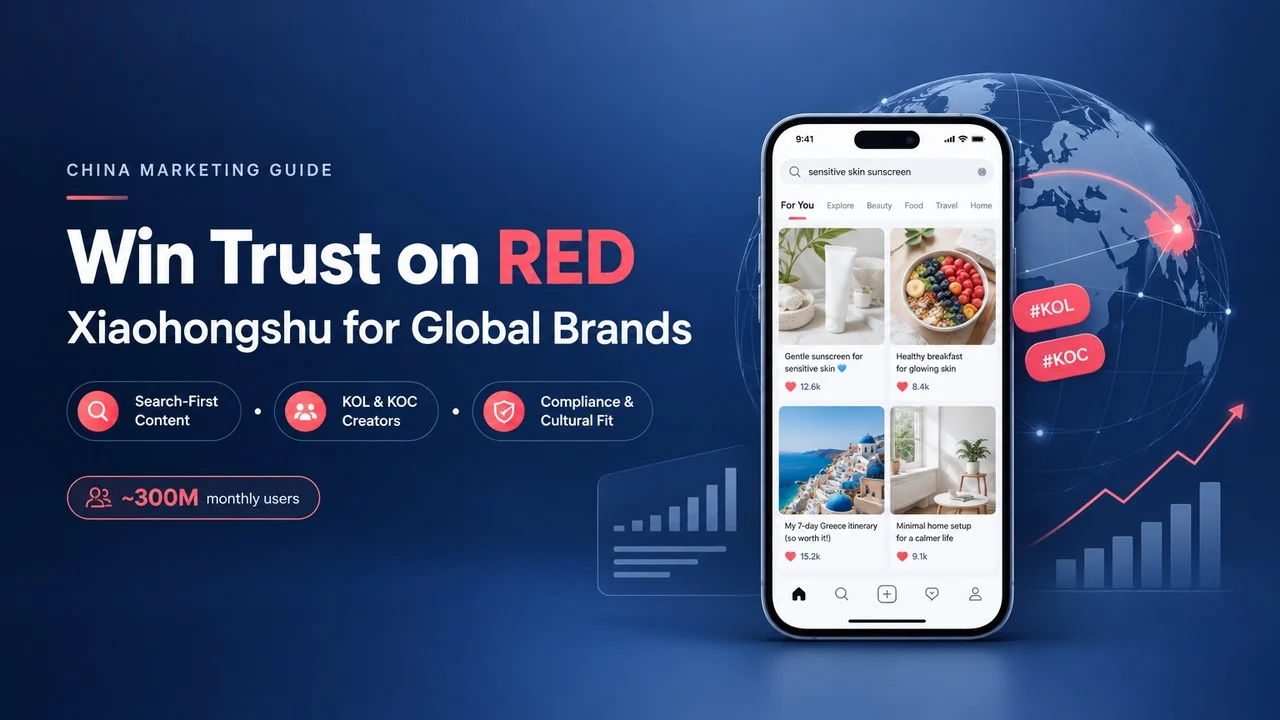
    Little Red Book Marketing for Global Brands

    Little Red Book marketing means building brand awareness and purchase intent on Xiaohongshu (also called RED), a Chinese lifestyle platform where users post “notes” reviewing products, routines, travel, and purchases. The platform is widely reported to have around 300 million monthly active users. It matters most to international brands in beauty, fashion, food, wellness, home, travel, and baby care, because Chinese consumers often search Xiaohongshu to check a product before buying it on Tmall, JD, or Douyin. If your China plan depends on people trusting a brand they have never seen in a store, Xiaohongshu is usually where that trust starts.

    Why Little Red Book marketing is hard to do from abroad

    Brands that treat Xiaohongshu as a Chinese-language Instagram usually struggle. The platform rewards content that reads like a peer’s honest recommendation, and users quickly spot copy that sounds like an ad. A brand team working from London or New York runs into four specific problems.

    Language and tone

    Notes are written in a casual, first-person style full of platform slang, emoji conventions, and keyword-heavy titles. A literal translation of your global campaign copy will read as corporate and miss the search terms Chinese users actually type.

    Platform mechanics

    Xiaohongshu works as much as a search engine as a feed. Users type queries like “sensitive skin sunscreen” and browse the top notes, so ranking for the right keywords matters as much as follower count. Cover images, titles, tags, and early engagement all affect distribution. Xiaohongshu doesn’t publish how it weights these, so teams work it out by testing.

    Compliance

    Article 9 of China’s Advertising Law prohibits superlatives such as “national-level,” “highest-level,” and “best,” and regulators treat similar terms, such as “number one,” the same way. Categories like cosmetics, supplements, and infant products face extra rules on efficacy claims. Xiaohongshu has also publicly cracked down on undisclosed paid posts and fake engagement, and accounts caught breaking the rules can lose reach or be penalized.

    Cultural fit

    What sells a product in your home market may not matter to Chinese users. Ingredient transparency, “value for money” comparisons, and use-case scenarios often outperform heritage storytelling. Getting this right takes someone who reads the platform every day.

    What Little Red Book marketing involves

    A working Xiaohongshu program requires coordinated effort across multiple areas. The five components below usually work together from day one, though their scale and priority differ by brand, category, and budget.

    1. Brand account setup and verification. Brands operate a verified professional account, which unlocks official branding, analytics, and access to commercial tools. Overseas companies can apply with foreign entity documents in many cases.
    2. Keyword and content strategy. You map the search terms your category’s buyers use, then plan notes around those queries. The work is closer to SEO than to social posting.
    3. Creator (KOL and KOC) collaboration. A KOL (key opinion leader) is a creator with significant reach. A KOC (key opinion consumer) is an everyday user with a smaller, highly engaged audience. Paid collaborations typically run through Pugongying, Xiaohongshu’s official creator collaboration platform, which handles disclosure and contracting.
    4. Paid amplification. Xiaohongshu’s ad platform, Juguang, supports search ads and in-feed promotion of notes. Brands typically boost notes that already perform well organically, rather than running cold ads.
    5. Monitoring and community management. This means tracking comments, mentions, and search rankings, answering questions, and catching negative sentiment before a bad review starts ranking for your brand name.

    Xiaohongshu’s Own Commerce Platform

    In addition to driving traffic to Tmall, JD, or Douyin storefronts, many international brands also sell directly on Xiaohongshu’s own marketplace. Xiaohongshu Shop lets creators and brands operate their own storefronts on the platform, selling products without leaving the Xiaohongshu ecosystem. This is especially valuable because users who discover a product in a note can buy it immediately, with minimal friction.

    Xiaohongshu Shop offers direct customer relationship data and the ability to capture impulse purchases at the moment of interest. KOL and KOC creators can also link to your shop directly from their notes, and the platform prioritizes notes that link to in-app sales. For beauty, fashion, wellness, and food brands, a Xiaohongshu Shop often becomes a significant revenue channel alongside or instead of third-party platforms.

    Operating a shop requires compliance with Xiaohongshu’s merchant policies and access to Xiaohongshu Logistics (for fulfillment to Chinese addresses). Overseas brands can apply directly, though some categories require a Chinese business entity or local logistics partnership. The operational lift is higher than seeding notes or running KOL campaigns, but ownership of customer data and the checkout experience often justify it.

    What a specialized partner adds

    A generalist agency can produce attractive posts. Results on Xiaohongshu depend on skills specific to China and to this platform.

    Capability DIY or generalist agency Xiaohongshu-specialized partner
    Keyword research Translated English keywords Native-language search terms validated on the platform
    Creator selection Picks by follower count Vets engagement quality and audience fit, and checks for inflated metrics
    Compliance review Global brand guidelines only Reviews copy against Chinese advertising rules and platform policies
    Commercial tools Limited access from outside China Operational experience with Pinduoduo and Juguang
    Channel connection Treats RED as standalone social Links RED demand to Tmall Global, JD, or Douyin storefronts

    People tend to underrate that last row. Xiaohongshu often creates the demand while the sale closes somewhere else. A partner who also understands cross-border e-commerce can make sure the product people discover on RED is in stock, correctly priced, and well reviewed where they go to buy it.

    How Up2China runs a Xiaohongshu program

    Up2China runs Xiaohongshu programs in phases, and each phase uses what the previous one showed. Scope and pace depend on your category, your budget, and whether you already sell in China.

    1. Discovery. We review your products, target customers, existing presence in China, and any regulatory constraints in your category.
    2. Platform audit. We study what people already say about your brand and your competitors on Xiaohongshu, and which search terms drive your category.
    3. Strategy and setup. Account verification, content pillars, a keyword plan, and a creator shortlist.
    4. Pilot. A limited first wave of brand notes and KOC collaborations to test which messages and formats work.
    5. Scale and optimize. We widen creator partnerships, put paid budget behind proven notes, and report on search visibility, engagement, and downstream sales signals.

    Xiaohongshu rarely runs on its own. Many programs also feed a broader China social media and KOL plan, a Tmall Global or JD storefront, or Douyin livestream and short-video content, and we plan those connections from the start.

    Talk to Up2China about your Xiaohongshu plan

    If you are weighing whether Xiaohongshu fits your China entry, start with a conversation about your category, your current channels, and what success would look like. Up2China supports international brands with market entry consulting, cross-border e-commerce management, digital marketing, and social media management for China. Reach out to discuss where Little Red Book marketing fits in your plan. If it doesn’t fit yet, we’ll tell you.

    Frequently Asked Questions

    Do I need a Chinese company to market on Xiaohongshu?

    Not necessarily. Overseas brands can often verify an account with foreign business documents and sell through cross-border channels such as Tmall Global without a Chinese entity. The requirements depend on your category and the account features you need, so check them before you build a plan around them.

    Is Xiaohongshu only for beauty and fashion brands?

    Beauty and fashion are the best-known categories, but food, home goods, travel, fitness, parenting, pet care, and consumer electronics are also active on the platform. What matters is whether your buyers research before they purchase. If they do, they are probably searching on Xiaohongshu.

    Should we start with KOLs or KOCs?

    Most brands learn more per dollar by starting with a wider group of KOCs. Their notes read as authentic and build a base of searchable content. Larger KOL partnerships tend to work better once you know which messages resonate and your product is easy to buy in China.

    Can we sell directly on Xiaohongshu instead of Tmall or JD?

    Yes. Xiaohongshu Shop lets brands run storefronts directly on the platform. This is particularly effective for beauty, fashion, and wellness brands where impulse purchases and immediate checkout matter. The trade-off is operational complexity: you need to handle merchant compliance, integrate logistics through Xiaohongshu Logistics, and potentially establish a Chinese entity depending on your category. Many successful programs use both Xiaohongshu Shop and third-party platforms (Tmall, JD) to diversify channels and reduce platform risk.

    How do we measure results if sales happen on another platform?

    Track metrics on Xiaohongshu itself, such as search ranking for target keywords, note engagement, and branded search volume, then compare them against traffic and sales on your Tmall, JD, or Douyin store. Attribution is imperfect, so consistent tracking over time tells you more than any single campaign number.
  • RedNote Ads: How to Launch Your First Campaign

    RedNote Ads: How to Launch Your First Campaign

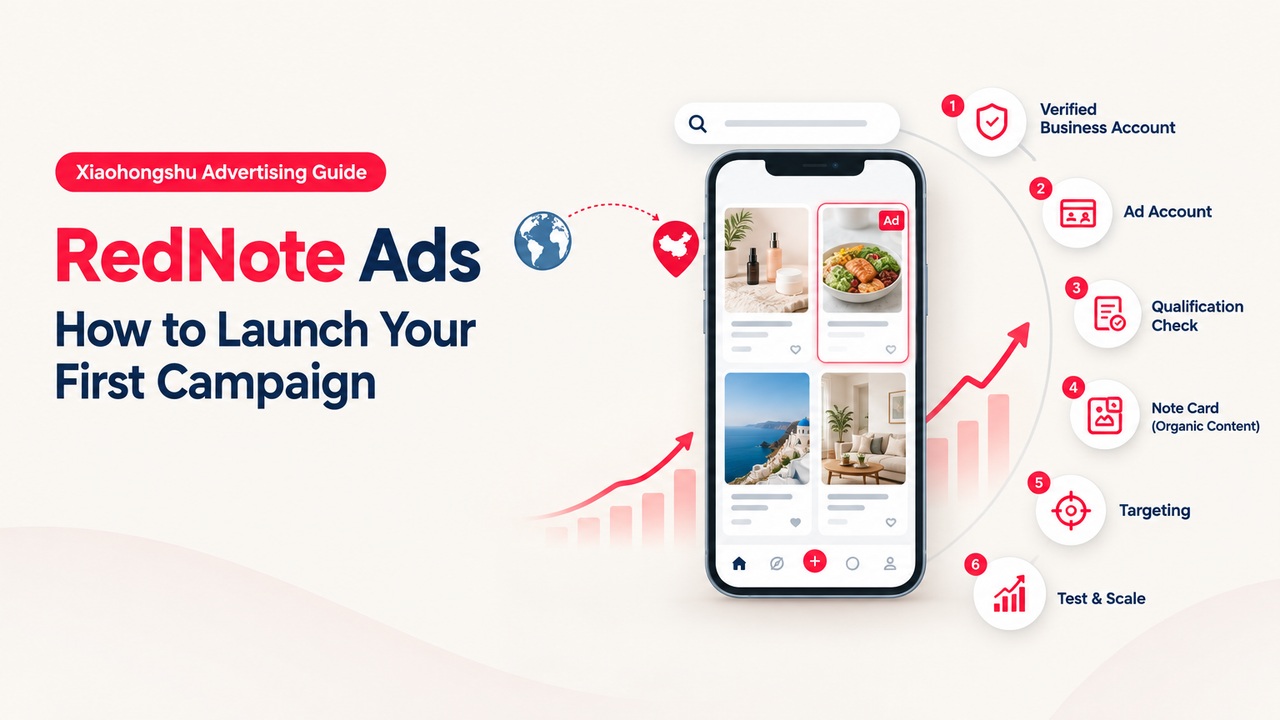
    RedNote ads are paid placements on Xiaohongshu, the Chinese lifestyle and product-discovery app known in English as RedNote. Most run through Juguang, the platform’s self-serve system for in-feed and search ads. A foreign brand’s first campaign takes six to eight steps: verify a business account, open an ad account, clear industry qualifications, build organic notes, set up targeting, then test and scale. Plan for several weeks. Document review and content building take most of that time, and the ad setup itself is quick.

    The Up2China team manages Xiaohongshu accounts and paid campaigns for international brands entering China. This guide follows the process in the order we run it with clients, explains why each step matters, and points out where foreign brands most often lose time or money.

    What RedNote ads are and how the ad system works

    Xiaohongshu (literally “Little Red Book”) is a content platform where users post “notes”: image or short-video posts reviewing products, travel, beauty, food, and home goods. According to Reuters reporting from June 2026, the platform has had over 400 million monthly active users since 2025. People search it the way Western shoppers check Google or Amazon reviews before buying. That search habit is why RedNote advertising works differently from Douyin or WeChat ads. Your ad appears while someone is researching a purchase, so it competes with reviews rather than with entertainment.

    Xiaohongshu has several commercial tools, and you should know which one does what before you start:

    Tool What it does Who typically uses it
    Juguang Self-serve ad platform for in-feed and search ads, with targeting and bidding Brands and agencies running paid campaigns
    Pugongying Official marketplace for paid creator (KOL/KOC) collaborations, with disclosed sponsorship Brands commissioning creator notes
    Shutiao Lightweight boost for an individual note’s reach Accounts testing which organic notes deserve more spend
    Qianfan Merchant backend for selling directly on Xiaohongshu Brands with an in-app store

    Xiaohongshu’s own marketing framework, often called KFS (KOL + Feeds + Search), links these tools. Creator notes build credibility, feed ads amplify the notes that perform, and search ads reach users who are already looking up your category.

    Prerequisites before you start

    Gather these before you open the ad platform. A launch usually stalls because one of them is missing.

    • A verified professional (business) account. Verification requires company documents. Overseas companies can apply through a cross-border verification route, with different requirements than mainland entities.
    • Company registration documents, plus trademark registration certificates if you advertise under a brand name. A trademark registered in China puts you in a much stronger position.
    • Category-specific permits. Cosmetics, health foods, infant formula, medical devices, and other regulated categories need proof of the relevant Chinese registration or filing before ads are approved.
    • A Chinese-language content plan and a native speaker who can review copy. Machine-translated notes perform poorly and can trip compliance filters.
    • A destination for conversions: a Xiaohongshu store, Tmall Global, JD, a WeChat account, or a lead form. Ads with no clear next step waste budget.

    Requirements vary by province and business type, so confirm with legal counsel.

    Step by step: launching RedNote ads

    1. Verify your professional account by submitting company documents and paying the verification fee, which agencies commonly set at around RMB 600 per review. A verified account can link to the ad tools and Pugongying, and the blue badge reassures users who are wary of grey-market sellers.
    2. Open a Juguang ad account. Foreign brands often do this through an authorized Xiaohongshu agency, mainly to handle payment and invoicing. The account entity determines billing, invoices, and who controls your ad data, so make sure it is registered to your brand and not owned outright by a vendor.
    3. Submit industry qualifications by uploading the permits for your product category, then wait for review. Ads in regulated categories are rejected without them, and each resubmission adds delay.
    4. Build an organic base of notes first. Publish product notes from your brand account and seed early creator content through Pugongying. Ads on Xiaohongshu usually promote notes, so a brand with no organic content has nothing credible to amplify. Users also check your account and search results before they trust an ad.
    5. Choose which notes to promote based on engagement data. Use Shutiao or small Juguang budgets to see which notes earn saves, comments, and click-throughs. Saves are a strong purchase-intent signal on this platform, and scaling a note that already earns them costs less than forcing reach on one that doesn’t.
    6. Set up search ads around category keywords. Bid on the terms Chinese users type, such as ingredient names, use cases, and comparison queries, in addition to your brand name. Few Chinese users know your brand yet, so category search is usually where they first find you.
    7. Configure targeting and tracking. Set audience interests, demographics, and region, and connect conversion tracking to your store or lead form where supported. Without tracking, you end up optimizing for cheap impressions.
    8. Review weekly and scale what works. Cut weak creatives, raise budgets on notes with strong save and conversion rates, and use what you learn in your creator briefs. Creative fatigue sets in quickly on a content platform, so you need a steady supply of new notes more than any single campaign setting.

    Common mistakes foreign brands make

    Treating RedNote like Instagram

    Polished brand imagery tends to underperform on Xiaohongshu. Users respond to notes that look like a real person’s review: specific and practical, often with text overlaid on the image. Glossy ads get scrolled past.

    Using banned superlatives in copy

    Article 9 of China’s Advertising Law bans terms such as “national-level,” “highest-level,” and “best”, and regulators apply the ban to other words with the same or similar meaning, such as “No. 1.” Brands that translate Western copy directly run into rejections, and efficacy claims for cosmetics and supplements get particular scrutiny.

    Paying creators off-platform without disclosure

    Xiaohongshu has publicly cracked down on undisclosed sponsored notes. Paying creators privately to avoid Pugongying risks note removal and account penalties, and you get no performance data from those deals.

    Running ads with no conversion path

    We regularly see brands get strong engagement on RedNote with nowhere for interested users to buy. If you don’t sell through cross-border e-commerce or a Xiaohongshu store, your ad spend builds awareness that competitors then capture.

    Bidding only on brand keywords

    A new entrant gets little brand search volume. Most of the volume sits in category and problem-based keywords, where competitors’ notes also appear.

    Running ads yourself or bringing in help

    You can run RedNote ads in-house if you have a native Chinese-speaking marketer, your category is unregulated, and your company documents are straightforward. The Juguang interface is usable, and small test budgets limit your losses while you learn.

    Outside help makes more sense in these situations:

    • Your product is in a regulated category, and you need to work out which Chinese registrations apply.
    • You have no Chinese-speaking staff to write notes, brief creators, and read comments.
    • You need Xiaohongshu to work alongside other channels, such as Tmall Global listings, Douyin content, or a broader social media and KOL program, so that spend on one platform supports sales on another.
    • You want the ad account opened under your own brand entity but have no mainland payment setup.

    Whichever route you take, keep ownership of your professional account and ad account. If you change agencies, your account history and audience data should stay with you.

    Frequently asked questions

    Can a foreign company advertise on RedNote without a Chinese entity?

    Yes. Overseas companies can verify a professional account and advertise, usually opening the ad account through an authorized agency. The documents you need depend on your category and how you sell.

    Are RedNote ads the same as paying KOLs?

    No. Juguang ads are paid placements you control directly, while Pugongying collaborations are content you commission from creators. Most effective campaigns use both and put ad spend behind the creator notes that perform best.

    Is the international RedNote audience worth targeting?

    Xiaohongshu’s core commercial audience is mainland Chinese users. A wave of English-speaking users, many of them self-described “TikTok refugees,” joined in January 2025 ahead of the US TikTok ban deadline, but the ad tools and the buyers are still focused on China.

    Plan your first RedNote campaign with Up2China

    If you’d like a second opinion before committing budget, Up2China can take you through this process, from account verification and qualification checks to note strategy, creator seeding, and Juguang campaign setup. We also tie RedNote activity to your wider China market entry and cross-border e-commerce plans, so the attention your ads generate turns into sales.

  • China Social Commerce: A Guide for Foreign Brands

    China Social Commerce: A Guide for Foreign Brands

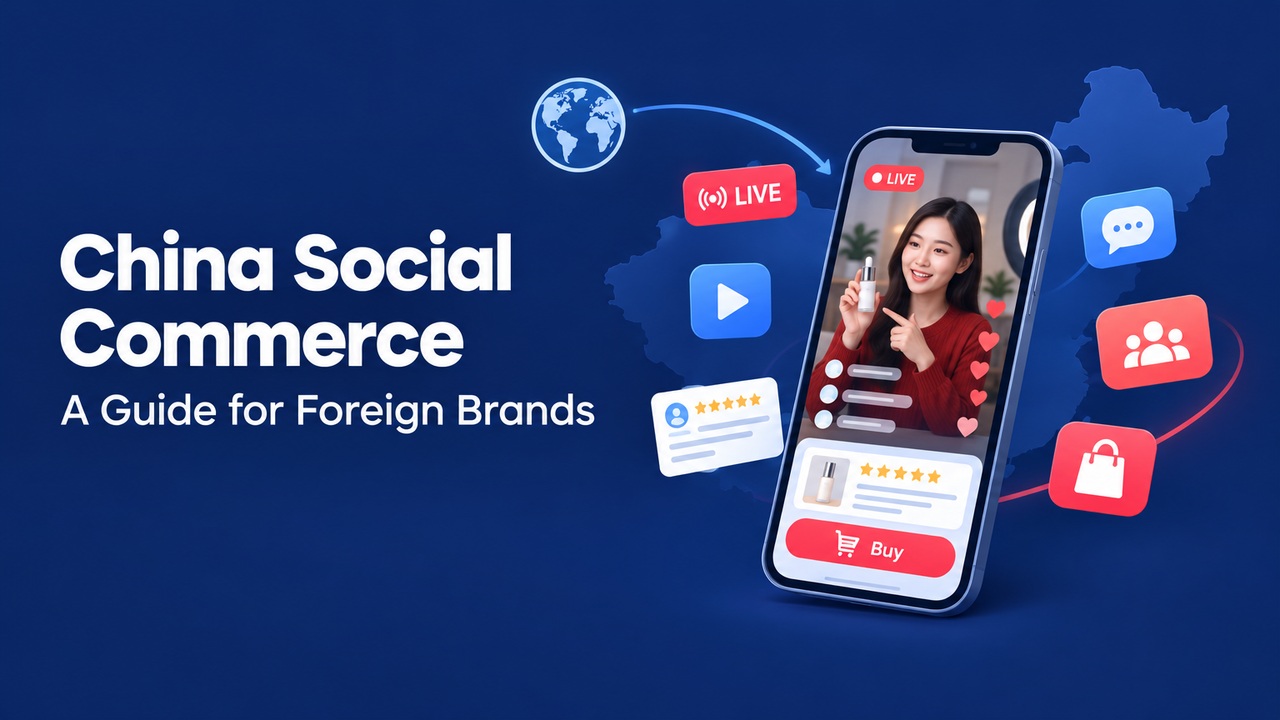
    China social commerce is the practice of discovering, evaluating, and buying products inside social and content apps such as WeChat, Douyin, Xiaohongshu, and Kuaishou, often without leaving the app. In China, it is a primary sales channel. Content, community, and checkout sit in one place, so a short video, a livestream, or a user review can turn into an order within minutes.

    For foreign brands, this means the app where people find you is usually the app where they pay you. A brand that lists on a marketplace and skips social content misses where many buying decisions are made now.

    Background: where China social commerce came from

    Social commerce in China grew out of two forces. One was super-apps that combine messaging, payments, and content. The other was a mobile-first population that skipped the desktop e-commerce era Western markets went through. Tencent’s WeChat set the template by putting chat, payment (WeChat Pay), and lightweight in-app storefronts called Mini Programs into one ecosystem. That ecosystem is very large: Tencent reported 1,439 million combined monthly active users for Weixin and WeChat as of 30 June 2026.

    Other platforms followed with different models:

    • Pinduoduo (now part of PDD Holdings) built its business on team purchasing, where users share deals with friends to unlock lower prices.
    • Xiaohongshu (RED) started as a community for sharing overseas shopping tips and became a search engine for lifestyle product reviews.
    • Douyin, ByteDance’s Chinese counterpart to TikTok, added in-app stores and livestream selling. Since its first e-commerce ecosystem conference in April 2021, it has marketed this as “interest e-commerce.”
    • Kuaishou built livestream commerce around creator-follower loyalty and is especially strong outside China’s top-tier cities. The Kuaishou app averaged 412.3 million daily active users in the second quarter of 2026, according to the company’s results release.

    How it works: five things foreign brands need to understand

    1. Products are found through content

    On Douyin and Xiaohongshu, the algorithm surfaces products through videos, notes, and livestreams more than through search results. A product with no content behind it is close to invisible, even when the listing is set up correctly.

    2. Livestream selling drives conversion

    In livestream commerce, a host demonstrates products in real time while viewers ask questions and buy through on-screen links. Brands either run their own store livestreams (often called self-broadcasting) or pay creators to feature products. Self-broadcasting gives you more control over price and messaging, while creator streams reach audiences you haven’t built yet.

    3. KOLs and KOCs carry trust

    A KOL (key opinion leader) is an influencer with a large following. A KOC (key opinion consumer) is an ordinary user whose reviews read like advice from a peer. Chinese consumers routinely check Xiaohongshu notes before they buy, so a base of believable KOC content often matters more than one expensive celebrity post.

    4. Private traffic is yours to keep

    “Private traffic” means customers you can reach directly, such as WeChat followers, customer groups, and Mini Program members, without paying a platform algorithm every time. It is the closest thing China has to an email list, and it is where repeat purchases come from.

    5. Each platform works differently

    Platform Owner Core social commerce mechanic
    WeChat Tencent Official Accounts, groups, and Mini Program stores for private traffic and repeat sales
    Douyin ByteDance Short video and livestream selling through an in-app shop
    Xiaohongshu (RED) Xingin Review-style notes and product research; in-app shopping
    Kuaishou Kuaishou Technology Creator-led livestream selling built on follower loyalty
    Pinduoduo PDD Holdings Group buying and shareable discounts

    Why China social commerce matters for foreign brands

    Foreign brands usually hit an awareness problem before a logistics problem. Chinese shoppers may never have heard of your brand, and social platforms are where you build awareness and trust. A Xiaohongshu note explaining why an imported skincare product suits Chinese skin often converts a first-time buyer better than a well-built Tmall listing.

    Social commerce also changes channel planning. A common setup pairs a marketplace store on Tmall or JD, which handles credibility and fulfillment, with Douyin and Xiaohongshu content that generates demand, and WeChat keeps those customers coming back. Brands without a Chinese legal entity can often start with cross-border e-commerce, shipping goods from bonded warehouses or overseas. For example, Douyin runs a cross-border program (Douyin Global Shopping) for overseas merchants. Available options depend on the platform and product category, and in 2026 platforms have reportedly tightened verification of overseas production and sales credentials for cross-border sellers.

    Compliance also applies. China’s advertising and e-commerce rules cover livestream claims, influencer disclosures, and product advertising, and categories such as health supplements and cosmetics face extra scrutiny.

    Related terms people confuse with social commerce

    • Cross-border e-commerce is importing and selling to Chinese consumers, for example through Tmall Global. The term describes the import model, not the sales channel, and you can sell cross-border with or without social commerce.
    • Livestream e-commerce is one format within social commerce, not a different name for it.
    • Influencer marketing means paying creators for exposure. It becomes social commerce once the content links straight to a purchase inside the app.
    • Content e-commerce is Douyin’s preferred framing. It overlaps heavily with social commerce but puts the algorithm ahead of the social graph.

    Is social commerce right for your China strategy?

    The right mix depends on your category, your price point, and whether you have a Chinese entity yet. Some brands should start by seeding content on Xiaohongshu before spending anything on Douyin livestreams. Others need a Tmall or JD store first, so social content has somewhere credible to send buyers. If you’re weighing whether China social commerce fits your plans, Up2China can help you map the platforms, compliance steps, and KOL marketing approach that suit your product, and can handle ongoing social media management once you launch.


    FAQ

    What is the difference between social commerce in China and in the West?

    In China, discovery, payment, and checkout usually happen inside a single app such as Douyin or WeChat. In many Western markets, social platforms still send users to an external website to complete the purchase.

    Do I need a Chinese company to sell through social commerce?

    Not always. Cross-border models let overseas brands sell on some platforms without a local entity, but eligibility depends on the platform and product category. Check the current rules with each platform and with legal counsel.

    Which platform should a foreign brand start with?

    For considered purchases like beauty, baby products, and wellness, many teams start with Xiaohongshu to build reviews and search visibility. Douyin suits products that demonstrate well on video. WeChat matters once you have customers worth keeping.

    Is livestreaming required to succeed?

    No, but it is one of the strongest conversion formats on Douyin and Kuaishou. Plenty of brands test creator livestreams first and move to self-broadcasting once they know what sells.

  • How to Run Douyin Ads in China: Setup Guide

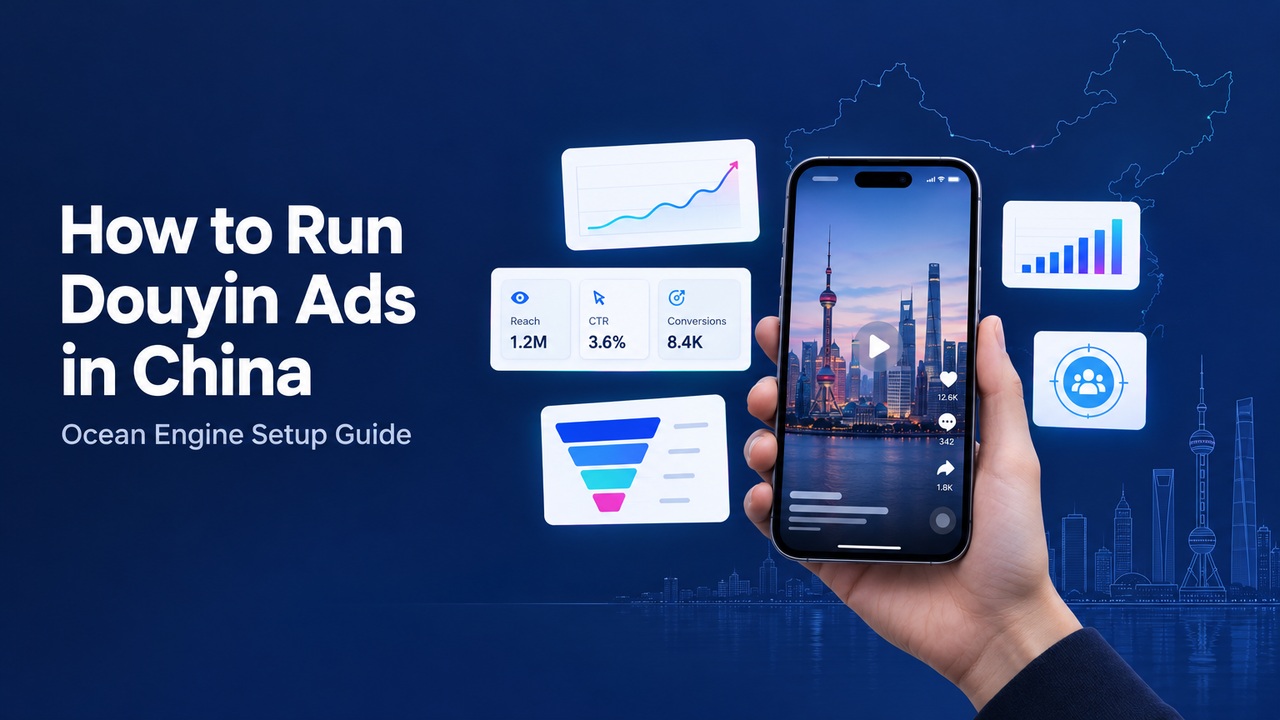
    How to Run Douyin Ads in China: Setup Guide

    Douyin ads run on Ocean Engine (巨量引擎), ByteDance’s advertising platform for its Chinese apps. Douyin is ByteDance’s China-only short-video app, a separate product from TikTok with its own users — QuestMobile put Douyin’s main app past 1 billion monthly active users as of March 2026 (1.009 billion, up 14.43% year on year), the first Chinese short-video app to cross that line — its own advertiser accounts, and its own review rules. Launching a first campaign takes about nine steps. For a foreign brand, the media build is usually the fast part; delays come from opening a compliant advertiser account, clearing brand qualification, and having a place for traffic to convert.

    Which Douyin ad platform you actually need

    ByteDance splits Douyin advertising across several systems. Each has a different account type, buying logic, and destination, and picking the wrong one is the most common first mistake.

    Product Chinese name What it does Use it when
    Ocean Engine 巨量引擎 Main ad buying platform aggregating inventory across Douyin and ByteDance’s other China apps Brand reach, landing-page traffic, form leads, app installs
    Qianchuan 巨量千川 Integrated e-commerce ad system for Douyin commerce, tied to Douyin Store and livestream selling Driving product sales and livestream room traffic
    Xingtu 巨量星图 Official marketplace for paid creator (KOL/KOC) collaborations and order matching Sponsored creator videos, hosted livestreams, seeding
    DOU+ 抖加 Self-serve boost applied to a single organic video; bought inside the Douyin app per order, not from a prepaid ad balance, and it only affects the video you promote Cheap creative testing before committing media budget
    Yuntu 巨量云图 Brand data platform built on Kotler’s 5A consumer asset model; access is gated by minimum ad spend Audience building and measurement, not buying

    What you need before you start

    • A Chinese business entity, or a relationship with an authorized Ocean Engine agency that can hold the account for you
    • Business license (or overseas registration documents, depending on the onboarding route) — Ocean Engine checks that the license shows valid, normal operating status on the national enterprise credit system and that its business scope covers what you are promoting
    • Trademark registration certificate (or the acceptance notice for a pending application), or a brand authorization letter if you are not the trademark holder
    • Category qualifications where they apply: imported cosmetics, food, health products, and medical devices each carry their own filing requirements, in the same way Ocean Engine demands a food operating permit or real-estate pre-sale permit in those verticals
    • A verified Douyin corporate account, and a Douyin Store if you intend to sell in-app
    • A conversion destination that works inside China: in-app checkout, a livestream, a native form, or an ICP-filed site with Alipay and WeChat Pay
    • Mandarin creative capability for scripting, voiceover, and on-screen text
    • Prepaid budget, since delivery only runs against a funded balance

    Requirements vary by province and business type. Confirm with legal counsel.

    Step-by-step: launching your first Douyin campaign

    1. Define the conversion event first. Ocean Engine optimizes toward the event you declare, so a campaign set to video views will find people who watch and leave. Whether you want leads or product sales determines the platform, the account type, and the destination, so settle the event before you settle anything else.
    2. Settle the account route. ByteDance sells both directly through the Ocean Engine site and through certified agencies, and the agency route is the practical one for brands without a Chinese company: the agency opens the account, handles top-ups and invoicing, and submits qualification files, generally at a higher effective cost than going direct. Negotiate account access, data export, and asset portability in writing before you fund anything. Brands that skip this lose their audience history when they later switch partners.
    3. Assemble qualification documents early. Ocean Engine reviews entity, industry, and content qualifications before your ads can serve, and incomplete files are the most predictable cause of a slipped launch date. Gather the trademark certificate (or application acceptance notice), the authorization chain, and any category filing while creative production is still running.
    4. Verify the corporate account and build the destination. Douyin’s commerce loop is closed by design, and traffic pushed to an external site leaks at every step, from page load to payment method. A Douyin Store, a scheduled livestream, or Ocean Engine’s native landing page and form builder all keep the user inside the app, where practitioners generally report better conversion than off-platform destinations.
    5. Fund the account. Douyin advertising is prepaid — Ocean Engine describes the flow as three steps: open the promotion account, complete the top-up, then choose an ad type and start delivering — so the balance has to sit in the account before delivery begins, and agencies typically set a minimum initial top-up plus a service arrangement. The money leaves your budget up front, so plan for it as working capital.
    6. Install conversion tracking and build audience assets. Set up event tracking on your forms or store events, and create crowd packages for retargeting. Without a clean conversion signal, oCPM bidding has nothing to learn from and will spend your budget on cheap impressions.
    7. Build a deliberately simple campaign structure. Start with a few ad groups and generous budgets per group so each one accumulates conversions and exits the learning phase. Splitting a modest budget across a dozen tightly segmented groups starves them all, and the algorithm never stabilizes.
    8. Produce Douyin-native creative in Mandarin. Vertical 9:16, a hook in the opening seconds, Mandarin voiceover with on-screen subtitles, local faces and local settings. Douyin’s auction rewards creative, and watch-through drives delivery cost, so give the system several genuinely different variants instead of one hero film in five crops.
    9. Clear ad review, then launch small. Ads are reviewed before serving, and China’s Advertising Law bars absolute superlatives — Article 9(3) names state-level, highest-grade and best, plus any term of the same or similar meaning. The market regulator’s enforcement guidance also refuses to treat absolute claims about efficacy, cure rates, or success rates as minor violations in medical, medical-aesthetic, drug, medical-device, health-food, and formula-food advertising, so beauty, health, and medical categories carry the tightest exposure. Write the compliance constraints into the creative brief so your copywriters don’t discover them during resubmission. Once delivery steadies, scale on cost per conversion; click-through rate on its own will mislead you.

    Mistakes foreign brands make on Douyin

    Recycling TikTok creative

    Reused TikTok assets give themselves away immediately: Western casting, English on-screen text, burned-in subtitles, and editing rhythms that read as imported. Account history, trending sounds, and comment culture are different ecosystems, too. Shoot for Douyin, or at least rebuild the edit with Mandarin audio and local reference points.

    Buying traffic with nowhere to land

    A lead form with no Mandarin-speaking follow-up is a dead asset. If your campaign generates inquiries, someone has to answer them in Chinese, through a channel Chinese buyers use (WeCom, Douyin direct message, or a mainland phone number), on the same day the lead arrives.

    Letting the agency own everything

    When the agency holds the advertiser account, the corporate account, the store, and the pixel, you can’t move your audience data or creative history. Fixing that at setup is cheap, and fixing it afterward is expensive.

    Treating Douyin as a standalone channel

    Chinese shoppers verify before they buy. A product that looks interesting in a Douyin video gets cross-checked on Xiaohongshu for reviews and on Tmall or JD for price and authenticity. If the brand has no footprint there, your paid click research will send them elsewhere and convert them for a competitor. Paid Douyin activity usually works better alongside KOL seeding, a Chinese-language site with basic SEO, and marketplace presence.

    DIY or bring in help

    Running Douyin ads in-house is realistic under specific conditions: you already have a Chinese entity, a Mandarin-fluent media buyer who has used Ocean Engine before, and local creative production. The interface, the support documentation, and the review feedback are all in Chinese, and the optimization levers assume familiarity with China-specific audience logic.

    Outside help earns its fee mainly at the edges of the media work: account opening and qualification, top-up and invoicing mechanics, review appeals, and the connective tissue between Douyin content, your store, and lead follow-up. Many brands land in the middle, outsourcing account setup and compliance, keeping creative direction in-house, and reviewing media performance jointly until they can read the numbers themselves.

    In-house is a harder case if Douyin is your first China channel, because paid traffic exposes every gap in the rest of the funnel at once.

    Frequently asked questions

    Can I run Douyin ads without a Chinese company?

    Overseas advertisers can onboard through an authorized agency that holds or sponsors the account. Brand and category qualification documents are required on either route; on the agency route, the agency files them for you.

    Are Douyin ads the same as TikTok ads?

    No. Douyin and TikTok are separate apps with separate ad platforms, separate advertiser accounts, and separate review standards. Audiences, pixels, and creative assets do not carry over, and a TikTok Ads Manager account gives you no access to Douyin inventory.

    How much should I budget to start?

    Enough that your chosen conversion event accumulates sufficient data for oCPM to stabilize, with the first weeks treated as creative testing. Below that threshold, you pay full price for results you cannot read. DOU+ boosts on organic videos are a cheaper way to find which creative angles earn watch-through before you commit media spend, and because DOU+ is bought per order inside the app, it does not require a funded Ocean Engine balance.

    Working through this with Up2China

    Up2China handles China market entry, cross-border e-commerce management and digital marketing for international brands, including Douyin account setup and advertising, social media and KOL programs, Tmall and JD operations, and lead generation for B2B brands. If you want a second read on your account route, your qualification documents, or whether your funnel is ready for paid traffic, that conversation is worth having before the budget goes live.

  • Chinese E-Commerce Giant: What the Term Really Means

    Chinese E-Commerce Giant: What the Term Really Means

    A Chinese e-commerce giant is one of the small group of platform operators that dominate online retail in mainland China: Alibaba Group (Taobao, Tmall, Tmall Global), JD.com, PDD Holdings (Pinduoduo and Temu), and ByteDance’s Douyin. The market they divide is large: China’s online retail sales reached RMB 15,972.2 billion in 2025, up 8.6% year on year, with online sales of physical goods alone at RMB 13,092.3 billion, or 26.1% of total retail sales of consumer goods. Most of these operators run marketplaces instead of selling their own stock. They host third-party sellers, own the payment and logistics rails, and sell traffic back to the brands on their platforms. For an international brand, choosing which giant to launch on determines the legal entity you need, who holds the customer relationship, and how much of your budget goes to platform advertising instead of product.

    Where the term comes from

    “Chinese e-commerce giant” is press shorthand. No formal threshold exists; the phrase is used once a company is large enough that its platform rules set the terms for every brand that sells on it, so a category fee change or an algorithm shift moves revenue across thousands of stores.

    Alibaba Group was founded in Hangzhou in 1999 and began as a B2B wholesale directory before launching Taobao, its consumer-to-consumer marketplace, in 2003. Alibaba launched Tmall in 2008 as the brand-authorized B2C mall, after concluding that Chinese consumers wanted branded products and a more premium shopping experience than the open marketplace offered. JD.com started as a physical electronics retailer in Beijing; its founder launched the online retail website in January 2004, and the company built its own warehousing and delivery network instead of outsourcing it. JD.com’s American depositary shares began trading on Nasdaq on 22 May 2014. Pinduoduo commenced commercial operations in 2015 with a social group-buying (“team purchase”) model; its parent, PDD Holdings, later founded Temu in September 2022 for shoppers outside China. ByteDance launched Douyin, its Chinese short-video app, in September 2016. It added in-app stores and livestream selling, so shoppers buy in-app instead of being sent to a separate marketplace.

    Operator Flagship platforms What it is Common route for a foreign brand
    Alibaba Group Taobao, Tmall, Tmall Global, AliExpress Marketplace operator; brands run their own stores and buy their own traffic Tmall Global store shipping from a bonded warehouse, or a Tmall store once a China entity exists
    JD.com JD, JD Worldwide Hybrid: third-party marketplace plus first-party retail on JD’s own logistics network JD Worldwide cross-border store, or selling stock to JD as a 1P vendor
    PDD Holdings Pinduoduo, Temu Price-led platforms with heavy algorithmic traffic distribution Rarely a first step for premium positioning; Temu serves overseas buyers, not China entry
    ByteDance Douyin Short-video and livestream app with e-commerce built into the feed Douyin store paired with livestream hosts and KOL seeding

    How these platforms actually work

    The platform does not buy your stock

    On Tmall, Tmall Global, and most of JD’s marketplace, the platform does not purchase your inventory. You open a store, hold the stock, set prices, handle customer service in Chinese, and pay a commission on sales. JD’s first-party business works differently: JD buys from you and resells, which looks more like a traditional retail account. The split shows up in JD’s own reporting — of the RMB 346.4 billion in net revenues it recorded in the second quarter of 2026, RMB 267.1 billion was product revenue it booked itself and RMB 79.3 billion was service revenue, the line that includes marketplace commissions and advertising.

    Traffic is something you buy

    Opening a store brings almost no visitors on its own. Each giant runs its own ad system, including keyword and display products inside Alibaba’s ecosystem, JD’s equivalents, and Douyin’s feed buying, and budget is the main lever on visibility. The scale of that business is visible in the financials: of PDD Holdings’ RMB 112.4 billion in total second-quarter 2026 revenues, RMB 57.6 billion came from online marketing services and others — in other words, roughly half of what the platform earns is seller advertising. Brands that treat a China store like a Shopify site and wait for organic demand tend to stall in month two.

    The ecosystems are closed

    Alibaba, JD, and ByteDance each keep their own payment, logistics, data, and advertising layer. Links do not flow freely between them, customer data largely stays with the platform, and there is no shared login. That is why a China program is usually built platform by platform instead of as one funnel, and why discovery channels like Xiaohongshu and Douyin content do separate work from the transactional store.

    Content sells before the product page does

    Chinese shoppers commonly research on social platforms before buying. Xiaohongshu reviews, Douyin livestreams, and KOL posts create the demand that a Tmall or JD store then converts. Social media and KOL spend sits at the top of the sales funnel here, and budgets usually reflect that.

    Cross-border and domestic have different requirements

    Cross-border channels such as Tmall Global and JD Worldwide let a brand sell without a Chinese company, shipping from bonded warehouses or direct from overseas, with products clearing as personal imports. The buyer base is substantial: 140 million people in China shopped through cross-border e-commerce platforms in the first half of 2026. Domestic platforms require a local entity, local licensing, and full product registration for regulated categories such as cosmetics, food, and supplements. Requirements vary by province and business type, so confirm with legal counsel.

    Why this matters for a foreign brand entering China

    The giants are the distribution system, so entry strategy comes down to sequencing: which platform first, cross-border or domestic, and what share of spend goes to building demand versus running the store.

    Two things are worth settling before any store application. China operates a first-to-file trademark system, and the US government’s own country guidance warns that it lets bad-faith applicants pre-empt legitimate owners’ rights and then hold the mark hostage; platforms ask for a Chinese trademark filing when you apply, so brands that skip it hit the problem at the application stage. A store also needs daily Chinese-language operations: product listings, customer chat during local hours, participation in the promotional calendar, and returns. Most international brands either hire in-market or work with a partner that already runs these teams.

    Category fit matters more than platform size. Beauty, maternal and infant, health, and premium food perform differently across Tmall Global, JD Worldwide, and Douyin, and a B2B industrial brand may be better served by a Chinese-language website, local SEO and SEM, and lead generation than by any marketplace store at all.

    Terms that get confused with this one

    • Taobao vs Tmall: Taobao is an open marketplace that includes individual sellers. Tmall is the brand-authorized mall, with verification requirements and higher barriers to entry.
    • Tmall vs Tmall Global: Tmall requires a Chinese business entity. Tmall Global is the cross-border version for overseas companies.
    • Douyin vs TikTok: both are ByteDance products — Douyin launched in September 2016 and TikTok roughly a year later —but they are separate apps on separate infrastructure with separate accounts and commerce systems. A TikTok Shop presence does not carry over to Douyin.
    • Temu and AliExpress: outbound platforms selling Chinese supply to overseas consumers. They are not China market entry.
    • Xiaohongshu: primarily a discovery and review platform with growing commerce features, usually used alongside a marketplace store rather than instead of one.

    Deciding which platform fits

    Up2China works on platform selection, store setup, and ongoing operation across Tmall, JD, Douyin, and Xiaohongshu, plus the social media and content work that feeds them. If you are weighing whether a Chinese e-commerce giant belongs in your China strategy, or which one to start with, a short conversation about your category, margin structure, and trademark status will narrow the options faster than a platform comparison chart.

    FAQ

    Which Chinese e-commerce giant is the largest?

    By reported revenue, Alibaba is the largest: it booked RMB 1,023,670 million (US$148,401 million) of revenue in its fiscal year ended 31 March 2026, though that total includes cloud and other non-commerce businesses. JD.com reported RMB 346.4 billion in net revenue in the second quarter of 2026, and PDD Holdings RMB 112.4 billion—but JD’s figure is inflated relative to the others because it resells inventory as first-party retail, while PDD’s is almost entirely commission and advertising. Douyin is growing from the content side; ByteDance is privately held and publishes no comparable figures. Rankings shift by metric, and none of these operators disclose platform GMV on a comparable basis. For entry planning, category share matters more than overall size.

    Do I need a Chinese company to sell on these platforms?

    Not for cross-border channels. Tmall Global and JD Worldwide are designed for overseas entities shipping from bonded or international warehouses. Domestic Tmall and JD stores require a local entity and local licensing, so many brands start cross-border and localize later.

    Is Temu a Chinese e-commerce giant?

    Temu is owned by PDD Holdings, one of the giants, but Temu was founded in September 2022 in Boston and sells to shoppers outside China. Using Temu does not give a brand access to Chinese consumers.

    Can one store reach all of them?

    No. Each platform requires its own store, app, documentation, product listings, and advertising account. You can reuse assets, but you can’t consolidate operations into a single storefront.

  • Cross-Border E-Commerce Food Import to China: Beginner Guide

    Cross-Border E-Commerce Food Import to China: Beginner Guide

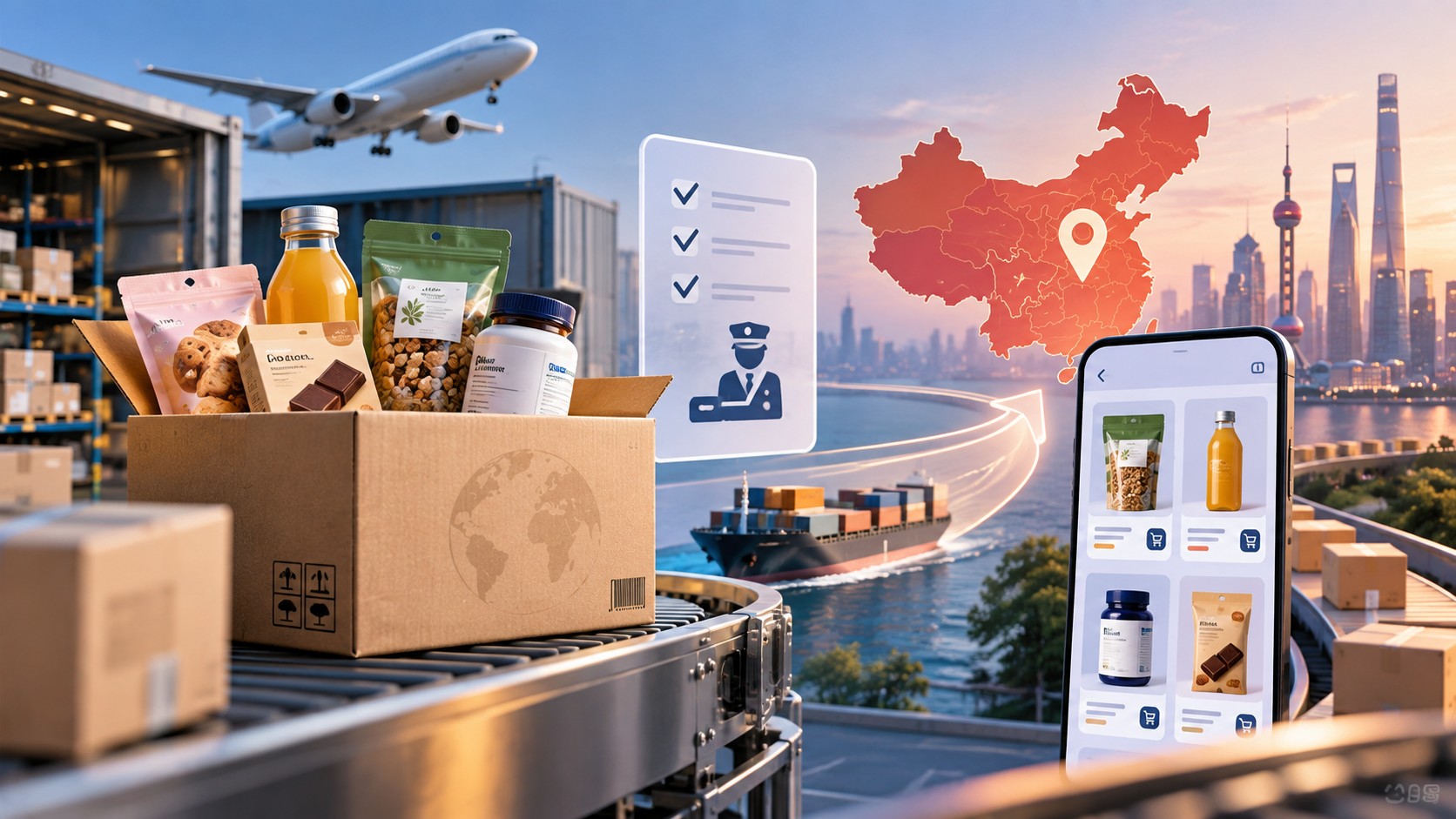
    Cross-border e-commerce food import to China is a customs channel that lets an overseas brand sell food and beverage products directly to Chinese consumers without registering a Chinese company, printing a Chinese-language packaging label, or first putting the product through domestic pre-market registration. Goods move either from a bonded warehouse inside a Chinese customs special supervision zone or by direct mail from overseas, and they are treated as personal imports bought by the individual consumer rather than as goods entering general domestic circulation. That legal distinction is what makes the channel workable for a brand with no China presence.

    The relief is conditional. It applies only to listed product categories, only to sales made to individual consumers through customs-connected platforms, and only within per-order and annual purchase limits set for each consumer. The channel is not a niche: China’s customs administration put total cross-border e-commerce imports and exports at RMB 2.75 trillion for 2025, although exports account for the larger share of that figure.

    Cross-border e-commerce food import to China: advantages for beginners

    Under general trade, imported food products must meet Chinese national food safety standards (the GB standards), carry a compliant Chinese label at the point of import, and clear inspection as a commercial consignment. Under the cross-border retail import model, the product is assessed as an item the consumer has purchased for personal use from abroad.

    Dimension Cross-border e-commerce retail import General trade import
    Chinese legal entity Not required; the overseas brand can be the seller of record Required, or a Chinese importer of record acting on your behalf
    Chinese packaging label Physical Chinese label generally not required; product information must be presented in Chinese online Compliant Chinese label required on the package and checked at import
    Product standards Product is sold as a personal import meeting origin-country standards; the consumer acknowledges this at checkout Product must conform to Chinese national food safety standards
    Buyer Individual consumers only; domestic resale of the goods is prohibited Any domestic buyer; goods enter normal commercial circulation
    Inventory Bonded warehouse stocking or overseas direct mail per order Bulk shipment cleared into the domestic market

    For brand demand testing, this means a product already selling in its home market can reach Chinese shoppers in its existing packaging. You learn whether Chinese consumers will buy it before you spend on formula work, label redesign, or a domestic entity.

    Who needs this channel, and who doesn’t

    A good fit

    • Overseas food, beverage, snack, and supplement brands with no Chinese subsidiary that want a first commercial presence.
    • Brands whose formulation or additive profile would need reformulation to meet Chinese domestic standards.
    • Brands running a market test before committing to general trade registration.
    • Brands whose demand is being generated by Xiaohongshu content or Douyin livestreams and who need a compliant place to convert that traffic.

    A poor fit

    • Brands that already have a Chinese entity, import licenses, and ship at volume. General trade usually becomes cheaper per unit at scale and removes the purchase caps.
    • Brands selling B2B, to distributors, restaurants, or retail chains. Cross-border retail import is for sales to individual end consumers only.
    • Products that fall outside the permitted scope. China maintains a Cross-Border E-Commerce Retail Import Commodity List (commonly called the Positive List), and a product not on it cannot use the channel.

    Requirements overview

    There is no single license to apply for. The channel works through conditions attached across the transaction chain. The categories below are stable; the specific figures attached to them change and should be confirmed before you budget.

    • Product eligibility depends on the Positive List: the item must fall within it under the applicable customs code and meet the relevant conditions. The 2022 revision, effective 1 March 2022, expanded the list to 1,476 tariff lines, added 29 items, and specified that 98 items could enter only through bonded imports. The notes attached to individual lines matter as much as the line itself.
    • Order, payment, and logistics data must be transmitted to customs in real time by parties registered with customs. This is why the channel runs through established platforms such as Tmall Global, JD Worldwide, and Douyin’s cross-border storefronts rather than an independent website.
    • Consumer purchases are generally capped at RMB 5,000 per transaction and RMB 26,000 per consumer per year — levels in force since 1 January 2019 and reaffirmed by Ningbo Customs in November 2025. Where an order contains only one item with a customs value above RMB 5,000 but below RMB 26,000, it can still come through the channel, provided the purchase does not take the buyer over the annual cap. Customs duty, import VAT, and consumption tax, where applicable, are then charged in full.
    • Eligible goods within the limits benefit from preferential cross-border e-commerce retail import tax treatment: the tariff rate is provisionally set at 0%, and import VAT and consumption tax, where applicable, are levied at 70% of the statutory payable amount. Customs value includes the retail price, freight, and insurance.
    • The registration picture runs the opposite way to what most brands assume. Because cross-border retail imports are supervised as goods for personal use, the first-import license, registration, and filing requirements that apply under general trade — formula registration for infant formula, and the health-food filing regime among them — are not applied to this channel, and overseas manufacturer registration with customs has so far not been applied to it either. That tax relief lowers the cost of selling infant formula, specialty nutrition, and supplement products through cross-border storefronts. A separate provision allows qualifying retail imports for personal use without the usual first-import licensing, registration, or filing requirements. These categories still face product-specific Positive List conditions, restrictions on claims and resale, and traceability and recall duties. The 2026 food recall rules also require sellers to appoint a food producer or operator in China to handle recalls.
    • The overseas seller and its domestic partner must maintain product traceability records and a workable recall plan. Since February 2026, this is explicit: the market regulator and the commerce ministry require a cross-border e-commerce food seller to entrust one domestic food production or business enterprise with recall work, report that enterprise to the platform operator, and stop sales and notify the authorities when a safety problem emerges.
    • Product information must be available in Chinese, and the buyer must be shown a notice that the goods meet the exporting country’s standards and may differ from Chinese domestic standards.

    Process overview

    1. Confirm the product’s classification and check it against the Positive List, including the footnotes on your specific tariff line.
    2. Screen for category-specific obligations. This is where infant and specialty nutrition products separate from ordinary food.
    3. Appoint the domestic enterprise that will handle recall and filing responsibilities, complete the appointment, and be ready to report it to your platform.
    4. Choose the platform and store type, then complete the platform’s qualification review: brand ownership or authorization, business registration in your home country, and product documentation.
    5. Choose your logistics model. Bonded warehouse stocking enables faster delivery and better unit economics for proven sellers; overseas direct mail avoids holding inventory when demand is unproven.
    6. Set up the data links so that order, payment, and logistics records reach customs from registered parties.
    7. Build the Chinese-language product page, including the consumer risk notice, and launch marketing.

    Platform review and customs data setup both depend on decisions made at step three, so reworking the agent arrangement after launch is expensive.

    What goes wrong

    Misclassifying a product so that it appears eligible when it is not leads to goods being held at the border. Selling in bulk to a domestic buyer who intends to resell breaks the personal-use premise of the whole channel and puts the store at risk. Claims on the product page, especially health benefits, are regulated separately from the import itself, and a compliant import with a non-compliant claim still draws enforcement. Incomplete traceability records make any consumer complaint far harder to resolve, and having no named domestic recall partner is now an exposure in its own right.

    Consequences typically escalate from shipment detention and platform listing removal toward store suspension and administrative penalties. Most of it is avoidable at the classification stage.

    Disclaimer

    Cross-border e-commerce import rules in China change regularly, including the composition of the Positive List, purchase limits, and how specific food categories are treated. We checked the figures in this guide in September 2026. Requirements vary by province and business type. Confirm with legal counsel. This guide describes how the channel is structured; get advice on your specific product and corporate setup before you act on it.

    Frequently Asked Questions

    Do I need a Chinese company to sell food through cross-border e-commerce?

    No. The cross-border retail import model was designed so overseas entities can be the seller of record. You will still need a domestic partner for certain filings and for on-the-ground responsibilities — recall execution in particular — but not a Chinese legal entity of your own.

    Can I use my existing packaging?

    Generally yes for the physical package under this channel, because the goods are treated as personal imports. The Chinese-language product information obligation shifts to the online listing, which must be complete and accurate.

    When should a brand move from cross-border to general trade?

    When volume makes per-unit tax and logistics costs under cross-border more expensive than general trade, or when you want offline distribution such as supermarkets, convenience stores, and food service, which cross-border retail import cannot serve. Moving to general trade also means picking up the registration and labeling obligations the cross-border channel spared you.

    Next steps

    The first useful step is usually a classification and eligibility check on your actual SKUs, followed by a decision on whether cross-border or general trade fits your volume plans. Up2China works with overseas brands on China market entry, cross-border e-commerce setup and store operations across Tmall, JD and Douyin, and on the Xiaohongshu content and KOL programs that make those stores worth opening. If you want a second opinion on where your product sits before you commit budget, get in touch.

  • Douyin vs RedNote: Which Fits Your China Strategy?

    Douyin vs RedNote: Which Fits Your China Strategy?

    Douyin and RedNote work in opposite directions. Douyin is an entertainment-first short-video app built to capture demand at scale. RedNote (Xiaohongshu) is a search-and-review platform where Chinese consumers look things up before they buy. One pushes content to you; the other is where people go to research. For a foreign brand entering China, that difference shapes your budget, your creative, and which product categories will convert.

    This comparison comes from running market-entry and social campaigns for overseas brands selling into China. Both platforms are walled gardens with their own logic, and calling them “the Chinese TikTok” and “the Chinese Instagram” can get brands in trouble fast. Here is how they differ on the dimensions that decide where your money goes.

    Douyin vs RedNote: Side-by-Side Comparison

    Douyin is ByteDance’s Chinese short-video app, the domestic sibling of TikTok, running on separate infrastructure with its own rules, and it reaches over 900 million monthly active users in China as of 2025. RedNote is the common English name for Xiaohongshu (literally “Little Red Book”), a lifestyle platform that blends image-and-text “notes,” video, and user reviews; it has grown to more than 350 million monthly active users. Here is the head-to-head.

    Dimension Douyin RedNote (Xiaohongshu)
    Scale (China MAU) Over 900 million (2025) More than 350 million (2025)
    Core format Full-screen short video, livestream Image-and-text “notes,” short video, livestream
    Discovery mechanism Algorithmic feed: content finds the user Search and category browsing: users find content
    Primary user intent Entertainment, passive scrolling Research, comparison, buying decisions
    Audience skew Broad across ages and city tiers Younger, female-leaning, urban, higher spending power
    Best-fit categories Mass-market, impulse, visually demonstrable products Beauty, skincare, fashion, travel, wellness, premium goods
    Content shelf life Short: viral spikes, fast decay Long: notes resurface via search for months
    Learning curve Steeper: video production and pacing Lower barrier: strong photography and honest copy go far
    Commerce model In-app store, livestream selling, strong impulse conversion Influence-led; increasingly in-app checkout, review-driven

    Where the Differences Actually Matter

    Discovery: push versus pull

    This is the dimension most foreign brands underestimate. Douyin’s algorithm decides who sees your content, so a single strong video can reach millions with no existing follower base. It also means visibility is volatile and largely out of your hands. You optimize for watch time, completion, and interaction to earn the next wave of distribution.

    RedNote works the opposite way. Much of its value comes from users actively searching for a product, brand, or problem: “is this serum worth it,” “what to pack for Hokkaido.” A well-tagged note can keep surfacing in search results for months after you publish it, building value over time. Douyin rewards momentum; RedNote rewards a durable, searchable library.

    Intent: entertained versus deciding

    On Douyin, you are interrupting entertainment. The creative has to earn attention in the first two seconds, and conversion usually depends on emotional pull, a demonstration, or a livestream host closing the sale in real time. On RedNote, the user often already has intent. They compare options and read reviews before they spend. That makes RedNote a strong fit for consideration-stage categories where trust and peer validation drive the purchase.

    Audience and category fit

    RedNote’s audience skews younger, more female (most third-party estimates put it around 70% women, concentrated in the 18–34 bracket), more urban, and more willing to pay a premium for beauty, skincare, fashion, wellness, and travel. If your product sells on aesthetics, ingredients, or lifestyle aspiration, this audience is a strong fit. Douyin reaches a broader range of age groups and city tiers, which suits mass-market, impulse products that perform well on video: gadgets, food, apparel, and home goods.

    Which Platform Fits Which Use Case

    Here are concrete scenarios:

    • A premium skincare brand testing China demand should start on RedNote. Buyers research ingredients and read reviews before they buy, and searchable notes build a trust footprint that outlives any single campaign.
    • A consumer-electronics accessory with a clear demo should lead with Douyin. The product sells itself in a five-second video, and the algorithm can quickly put that demo in front of a huge cold audience.
    • A packaged-food or beverage brand chasing volume and trial belongs on Douyin, especially paired with livestream selling, where hosts drive impulse purchases at scale.
    • A boutique fashion or travel-adjacent brand should start on RedNote, where aspirational imagery and authentic recommendations are the native language.
    • A brand with a modest budget and no China entity yet can use RedNote to build credibility with strong photography and honest content before committing to heavy video production.

    Should You Use Both Together?

    For many brands, the answer is yes, but run them in sequence rather than both at once. A common, effective pattern is to build searchable credibility and social proof on RedNote first, then use Douyin to drive reach and conversion volume once the product has reviews and recognition behind it. When a shopper sees your product on Douyin and then searches it on RedNote, finding a healthy body of authentic notes closes the trust gap that would otherwise kill the sale.

    The mistake is copying and pasting identical creative across both. Douyin content that ignores RedNote’s research-and-review culture reads as an ad and gets ignored; RedNote-style notes rarely have the pacing to survive Douyin’s feed. Budget for platform-native creative on each, or pick one and do it properly.

    Both platforms operate under Chinese advertising and content regulations, and requirements for commerce, cross-border logistics, and account setup vary by business type. Confirm the specifics with qualified counsel or a local partner before you commit spend.

    Deciding for Your Specific Brand

    The right answer depends on your category, margin, budget, and whether you are chasing awareness or considered purchases. If you would rather not guess, our team helps overseas brands map the right platform mix, set up compliant accounts, and run China social campaigns end to end. A short market-entry consultation is a sensible next step before you spend on either platform. Reach out through Up2China to talk through what fits your goals.

    Frequently Asked Questions

    Is RedNote the same as Xiaohongshu?

    Yes. RedNote is the English nickname widely used for Xiaohongshu, which translates to “Little Red Book.” They are the same platform, a lifestyle and social-commerce app centered on user notes, reviews, and search-driven discovery.

    Do I need a Chinese business entity to sell on these platforms?

    It depends on the setup. Some cross-border models let foreign brands sell in China without a local entity, while native in-app stores usually require more registration. Because rules vary by platform and business type, confirm current requirements with a local partner before committing.

    Which platform is better for a small marketing budget?

    RedNote is often the more forgiving starting point for a limited budget. Strong photography and honest, well-tagged notes can perform without the production cost of polished short video, and that content keeps surfacing through search over time rather than disappearing after a single push.

    Can I just reuse my TikTok content on Douyin?

    Not reliably. Douyin runs on separate infrastructure with its own algorithm, trends, and audience expectations, and foreign accounts face practical setup and localization hurdles. Content usually needs to be adapted to local pacing, formatting, and cultural cues rather than reposted as-is.

  • What Is Xiaohongshu? A Guide to China’s RED App

    What Is Xiaohongshu? A Guide to China’s RED App

    Xiaohongshu (小红书), known in English as RED or Little Red Book, is a Chinese social commerce platform that combines user-generated lifestyle content with in-app shopping. Users post “notes,” photo and video reviews of products, places, and experiences that others search and browse before deciding what to buy. It works a bit like Instagram and Pinterest crossed with a review site, with a built-in store.

    For foreign brands, that mix is the whole appeal. Xiaohongshu is where Chinese consumers, especially younger urban women, research a purchase before they buy, which makes it one of the most influential discovery channels in the China market.

    Where Xiaohongshu came from

    Xiaohongshu launched in 2013 in Shanghai, founded by Charlwin Mao and Miranda Qu as an app for Chinese people to review merchandise they bought overseas while traveling. It started as a simple shopping guide for Chinese travelers buying products overseas, then grew into a community where members shared what they had bought and why. E-commerce came later, built on an audience that already trusted the platform’s recommendations.

    The company has raised funding from major Chinese tech investors, including Tencent, which first backed it in a 2016 Series C round, and Alibaba, which led a roughly $300 million round in 2018. Its monthly active user base has grown to more than 300 million, weighted heavily toward younger women in first- and second-tier cities. The makeup of that audience matters more than the headline number: these users have disposable income and tend to research purchases before committing.

    How Xiaohongshu works

    A few mechanics explain most of what a foreign brand needs to know.

    Notes are the core content unit

    A “note” (笔记) is a post, usually a set of photos or a short video with a caption. Notes read like personal recommendations rather than ads: a skincare routine, a hotel review, an outfit breakdown. That first-person, experience-based format is why the content feels trustworthy, and it is what every brand and creator publishes in.

    People use it as a search engine

    Many users open Xiaohongshu specifically to search. They type in a product category, a destination, or a brand name to see what real people have posted. That behavior makes the platform closer to a consumer search engine than a passive feed. For brands, it means being discoverable for the right keywords matters as much as posting often.

    Content and commerce sit side by side

    Xiaohongshu has a built-in store, so a user can go from reading a review to buying without leaving the app. It also supports livestream shopping and links content to product pages. The platform is designed to shorten the distance between inspiration and purchase.

    Creators (KOLs and KOCs) drive reach

    Influence on Xiaohongshu spreads through two groups: KOLs (Key Opinion Leaders, the larger influencers) and KOCs (Key Opinion Consumers, everyday users with smaller but highly trusted followings). KOC seeding, meaning getting many ordinary users to post authentic notes, is a defining Xiaohongshu tactic, because a large volume of genuine-looking recommendations carries real weight with buyers.

    Strong in specific categories

    The platform over-indexes on beauty, skincare, fashion, travel, food, wellness, and home. If your product lives in one of those worlds, the audience fit is direct. Categories further from lifestyle content can still work, but they take more creative framing.

    Why Xiaohongshu matters for foreign brands

    Entering China is largely a discovery problem: Chinese consumers won’t buy what they have never heard of and can’t verify. Xiaohongshu sits right at that verification step. A shopper who sees a foreign brand mentioned across dozens of authentic notes treats it as validated in a way a paid banner never achieves.

    It is also a low-friction entry point. A brand can build awareness and read genuine consumer sentiment on Xiaohongshu before committing to a full marketplace launch, which serves as market research and marketing at once. Because the platform rewards consistent, credible content over one-off campaigns, it favors brands willing to show up authentically rather than buy their way in.

    There is a trade-off. The platform is content-hungry and closely moderates promotional material. Overtly salesy or non-compliant posts get limited reach. Success usually takes a sustained content and creator strategy, localized for Chinese tastes, rather than reposting Western marketing.

    Terms readers often confuse

    • Xiaohongshu vs. RED vs. Little Red Book: all the same platform. RED and Little Red Book are the common English names.
    • Xiaohongshu vs. Douyin: Douyin is China’s TikTok, video-first and built around entertainment. Xiaohongshu is search- and review-driven, closer to a lifestyle recommendation engine.
    • Xiaohongshu vs. Tmall Global: Tmall Global is a cross-border marketplace where transactions happen at scale. Xiaohongshu is mainly a discovery and community platform, though it also has commerce features. Many brands use them together: Xiaohongshu to build demand and a marketplace to capture it.

    Requirements and platform rules vary and change often, so confirm current advertising, e-commerce, and content policies before launching.

    Deciding whether Xiaohongshu fits your strategy

    If your brand sells in a lifestyle category and your China goal is building trusted awareness, Xiaohongshu deserves a serious look, often as one of the first channels rather than an afterthought. If you are weighing where it fits alongside marketplace and paid-media plans, that sequencing is worth mapping before you spend.

    If you are evaluating whether Xiaohongshu belongs in your China market-entry plan, up2china helps foreign brands with market entry consulting, cross-border e-commerce management, and social media strategy tailored to platforms like this one. Talk to us about where to start.

    Frequently asked questions

    Is Xiaohongshu the same as RED or Little Red Book?

    Yes. Xiaohongshu is the Chinese name; RED and Little Red Book are the English names used for the same app. “RED” comes from the literal translation of the brand.

    Do I need a Chinese business entity to use Xiaohongshu?

    Building a brand presence and publishing content is more accessible than running full commerce, but selling and advertising usually involve verification and platform requirements that can depend on your business setup. Confirm the current rules with a local partner or legal counsel before committing.

    What kinds of products perform best on Xiaohongshu?

    Lifestyle-driven categories such as beauty, skincare, fashion, travel, food, wellness, and home fit the platform’s content and audience most naturally. Products outside these areas can succeed, but they usually need more creative, story-led framing.

    How is Xiaohongshu different from advertising in the West?

    Reach on Xiaohongshu comes from authentic, experience-based notes and creator recommendations rather than traditional ads. Overtly promotional content is deprioritized, so the platform rewards consistent, credible participation over one-time paid campaigns.

  • Is Douyin the Same as TikTok? Key Differences Explained

    Is Douyin the Same as TikTok? Key Differences Explained

    No, Douyin and TikTok are not the same app. Both are built by the Chinese company ByteDance and share a similar short-video interface, but they run on separate infrastructure, serve different markets, and follow different rules. Douyin operates inside mainland China for domestic users; TikTok is the international version available in most other countries. For a foreign brand, that distinction shapes how you register, sell, and market.

    The confusion is understandable. TikTok launched internationally as ByteDance’s export of the Douyin model, and the two look almost identical at first glance. But you cannot download Douyin from a Western app store to reach Chinese consumers, and a TikTok account doesn’t exist inside China’s ecosystem. Treating them as one product is a common mistake brands make when they first look at China.

    Douyin vs TikTok: the core difference at a glance

    Same parent company, same DNA, two walled-off products. Douyin (抖音) is the mainland China app; TikTok is everywhere else. They do not share user accounts, content libraries, e-commerce systems, or moderation standards. Douyin is a giant in its own right: It has more than 700 million daily active users in China, and later industry estimates put the figure even higher.

    Dimension Douyin TikTok
    Market Mainland China only Most countries outside mainland China
    Parent company ByteDance ByteDance
    User accounts Separate, tied to Chinese phone numbers/ID Separate, global sign-ups
    Language & content Mandarin, China-focused Localized per region
    Native e-commerce Deeply integrated (Douyin Shop, live-selling) TikTok Shop, availability varies by market
    Payment rails WeChat Pay, Alipay, Douyin Pay Local card/wallet providers per region
    Content moderation Chinese regulatory standards Regional community guidelines
    Cost of entry for foreign brands Higher, requires local structure or partner Lower, standard advertiser onboarding in many markets

    Why two apps instead of one

    The split is not a marketing decision. It reflects how China’s internet is governed. Mainland China runs a distinct regulatory environment for content, data, and payments. Apps serving Chinese users must comply with domestic rules on content review, data storage, and real-name registration. Rather than bend a global product to fit those requirements, ByteDance keeps Douyin as a separate app built for China and runs TikTok independently for the rest of the world.

    This matters because the two platforms evolve on different clocks. Features often appear on Douyin first, particularly commerce tools, because the Chinese market has adopted in-app shopping and live-stream selling far more aggressively than most Western markets. In China, Douyin is more than a video app. People use it to search, browse storefronts, and discover products. TikTok is closing that gap through TikTok Shop, but the depth of integration and the consumer habit of buying inside the app is more mature on Douyin.

    E-commerce: where the gap is widest

    For a cross-border brand, the commercial difference is the one that actually affects your budget and roadmap. Douyin has built a closed retail loop where a user can watch a live stream, tap a product, pay, and check out without leaving the app. The scale is real: Douyin’s e-commerce GMV was roughly ¥3,500 billion in 2024, driven largely by short video and live streaming. Live-selling is a mainstream channel in China, and hosts can move large volumes in a single session. Chinese consumers are used to discovering and buying products this way.

    Selling on Douyin as a foreign brand generally means one of two paths: establishing a qualified presence that can operate a Douyin Shop, or working through a cross-border model and local partners who handle the storefront, fulfillment, and compliance for you. The onboarding requirements, including business qualifications, local payment integration, and Mandarin content and customer service, are meaningfully heavier than opening a TikTok advertiser account. Requirements vary by business type and category, so confirm the specifics with a qualified partner or legal counsel before committing.

    Content and culture don’t transfer

    The content itself doesn’t map cleanly from one app to the other. A video that performs on TikTok will not necessarily land on Douyin, and the reverse is true too. The trends, humor, music, editing conventions, and creator norms are shaped by each audience. Douyin content is produced in Mandarin for a Chinese cultural context, so recycling your global TikTok library with subtitles rarely works. A strong Douyin presence usually means content built for the platform from scratch, often with Chinese creators (the local equivalent of influencers, sometimes called KOLs).

    Which app fits which goal

    The right platform depends on who you are trying to reach.

    • You want to reach consumers inside mainland China: Douyin is the relevant platform. TikTok will not get you there.
    • You want to reach Chinese-speaking or overseas Chinese audiences outside the mainland: TikTok, plus other channels, is the practical route. Douyin is not designed for that user base.
    • You want global short-video reach across Western and Southeast Asian markets: TikTok is the tool, with lower barriers to entry and familiar advertiser onboarding.
    • You want to sell directly to Chinese shoppers through video: Douyin’s commerce ecosystem is built for this, though it demands local structure and China-specific content.

    Can you use both together?

    Yes, and for many international brands that’s the sensible strategy, though the two apps do different jobs. TikTok can build global awareness and community, while Douyin is your channel into the Chinese domestic market and its shopping behavior. The mistake is assuming a single content strategy and one team can serve both. They require separate accounts, separate localized content, separate compliance, and often separate partners. Think of them as two distinct markets that happen to share an interface, not one campaign with two logins.

    Deciding your China entry path

    If you’re weighing whether Douyin belongs in your China strategy, or how to build a presence without a local entity, the answer depends on your category, your margins, and how much of the operation you want to run in-house versus through a partner. That’s the kind of decision worth pressure-testing before you commit budget. At up2china, we help international brands map the right platform mix, set up compliant cross-border e-commerce, and run China-specific social and marketing so your Douyin presence is built for the market, not translated into it. If you’d like help deciding which app fits your specific goals, that’s a good next step.

    Frequently Asked Questions

    Can I use my TikTok account on Douyin?

    No. The two apps run on separate systems and do not share accounts, content, or followers. To be on Douyin, you need a separate presence set up within the Chinese ecosystem, usually tied to Chinese registration requirements.

    Can people in China use TikTok?

    TikTok is not the app domestic users in China rely on. Douyin fills that role inside mainland China. If your goal is reaching consumers in the mainland, TikTok is not the channel. You need Douyin.

    Is Douyin available in English or outside China?

    Douyin is built for the mainland Chinese market in Mandarin and is not intended for use outside China. International audiences use TikTok instead. This is why a China strategy and a global TikTok strategy are separate efforts.

    Do I need a Chinese company to sell on Douyin?

    Not always, but selling on Douyin requires meeting its business qualifications, and foreign brands often use a cross-border model or a local partner to handle the storefront, payments, and compliance. Requirements vary by category and business type, so confirm the specifics before you plan around them.

  • What Is Douyin? A Guide for Brands Entering China

    What Is Douyin? A Guide for Brands Entering China

    Douyin is a Chinese short-video app owned by ByteDance, built around a personalized, algorithm-driven feed of vertical videos. It is the domestic Chinese version of TikTok, running on separate infrastructure and serving only the mainland China market. For international brands, Douyin works less like a social network and more like a discovery and commerce engine, where content, live streaming, and in-app shopping all sit inside one platform.

    If you already know TikTok, you know the surface. What you probably don’t know is how differently Douyin behaves as a sales channel, and why that difference matters the moment you try to reach Chinese consumers.

    Background: who owns Douyin and where it fits

    ByteDance launched Douyin, the same company behind TikTok. The two apps share a common origin and a similar interface, but they are separate products in practice. Douyin runs inside China’s internet environment, hosts Chinese-language content, and is subject to Chinese regulation and content review. TikTok serves markets outside mainland China. Douyin has grown into one of China’s largest platforms, with more than 900 million monthly active users.

    The category is usually called “short-form video,” but that undersells it. Douyin is a full content-and-commerce ecosystem: entertainment, search, live streaming, and a native shopping layer all live in one place. Chinese users open it to be entertained, to search for products and reviews, and to buy, often in the same session.

    How Douyin works: the features that actually matter

    For a foreign brand, five mechanics are worth understanding before anything else.

    The recommendation algorithm

    Douyin’s feed is interest-based, not follower-based. A brand-new account with no followers can reach a large audience if the algorithm decides the content performs well with a test audience. That lowers the barrier to early visibility, but it rewards content quality over accumulated fan counts.

    Native e-commerce and Douyin stores

    Douyin has an integrated shopping system. Products can be attached to videos and live streams, and users can complete a purchase without leaving the app. This is why Douyin is treated as a sales channel rather than a marketing-only platform. Seeing a product, tapping it, and checking out all happen in one flow. The scale is significant: Douyin’s e-commerce GMV reached roughly 3.5 trillion yuan in 2024, up about 30% year on year.

    Live-stream selling

    Live commerce is central to Douyin, not a niche feature. Hosts demonstrate products in real time, answer questions, and push limited offers during a broadcast. For many categories, a single live session can drive more sales than weeks of static posts. Livestreaming has become mainstream in China: by the end of 2024, an estimated 833 million people — a large majority of China’s internet users — watched livestreams, according to CNNIC data.

    Douyin as a search engine

    Chinese users increasingly search inside Douyin the way they might search on Google or Baidu, looking for product comparisons, tutorials, and recommendations. That makes discoverable, well-tagged content a lasting asset rather than a one-day feed item.

    Influencer and KOL partnerships

    Key Opinion Leaders (KOLs) and smaller Key Opinion Consumers (KOCs) are how most brands scale reach and credibility. A KOL is an influencer with an established audience; a KOC is a smaller, everyday creator whose recommendations read as more authentic. Both plug directly into Douyin’s commerce tools.

    Why Douyin matters for foreign brands entering China

    Douyin combines brand-building and direct sales in one place, which is exactly where most China entry strategies struggle. On many Western platforms, you build awareness in one place and convert somewhere else. On Douyin, discovery and purchase happen in the same environment.

    That changes the economics of market entry. A foreign brand can test demand, build recognition, and generate revenue through a single channel instead of stitching together separate awareness and conversion funnels. For categories where visual demonstration sells, such as beauty, food, apparel, home goods, and gadgets, the format is a strong fit.

    It also reflects how Chinese consumers actually shop: through content, social proof, and live interaction rather than a static product catalog. With China’s internet user base surpassing 1.1 billion as of December 2024, the audience reachable through this content-first model is vast. A brand that treats Douyin like a Western ad platform tends to underperform. A brand that treats it as a content and commerce engine, with localized creative and creator partnerships, is working with the platform instead of against it.

    One practical note: running a Douyin commerce presence involves account setup, verification, and content localization that assume familiarity with the Chinese digital environment. Requirements vary by business type and can change, so confirm the current rules with a qualified local partner or legal counsel before committing budget.

    Douyin vs. terms people confuse it with

    A few distinctions clear up most of the confusion.

    • Douyin vs. TikTok: Same parent company, separate apps. Douyin is China-only; TikTok serves international markets. A TikTok account does not give you a Douyin presence, and content strategies do not automatically transfer.
    • Douyin vs. WeChat: WeChat is a messaging and social “super-app” centered on private networks and mini-programs. Douyin is a public, algorithmic discovery platform. Many brands use both for different purposes.
    • Douyin vs. Xiaohongshu (RED): Xiaohongshu leans toward lifestyle reviews and research-heavy discovery, and is often described as a China-focused mix of Instagram and a review platform. Douyin leads with video entertainment and live commerce.

    Considering Douyin for your China strategy?

    Whether Douyin fits your brand depends on your category, your margins, and how ready your product is for a content-first, live-commerce market. If you’re weighing that decision, the up2china team works with international brands on China market entry, cross-border e-commerce management, and social media strategy across platforms like Douyin. Talking it through is a sensible step before you invest in localization and creator partnerships.

    Frequently Asked Questions

    Is Douyin the same as TikTok?

    No. They share the same parent company, ByteDance, and a similar design, but they are separate apps on separate systems. Douyin operates only in mainland China, while TikTok serves markets outside China. Content and accounts do not carry over between them.

    Can foreign brands sell directly on Douyin?

    Yes, foreign brands can sell on Douyin, but it involves account setup, verification, and content localization suited to the Chinese market. The specific requirements depend on your business structure and product category, so confirm the current rules with a local partner before you begin.

    Do I need followers to succeed on Douyin?

    Not at first. Douyin’s feed is interest-based, so strong content can reach a wide audience even from a new account. Lasting success usually comes from consistent, high-quality content, creator partnerships, and using the platform’s live-commerce and shopping features.

    What kinds of products perform well on Douyin?

    Products that demonstrate well on video tend to perform best, including beauty, food and beverage, apparel, home goods, and consumer gadgets. The common thread is a visual or experiential quality that a short video or live stream can show off quickly.